המאמר השמיני בפרויקט Sivi קוראת צ’וסר
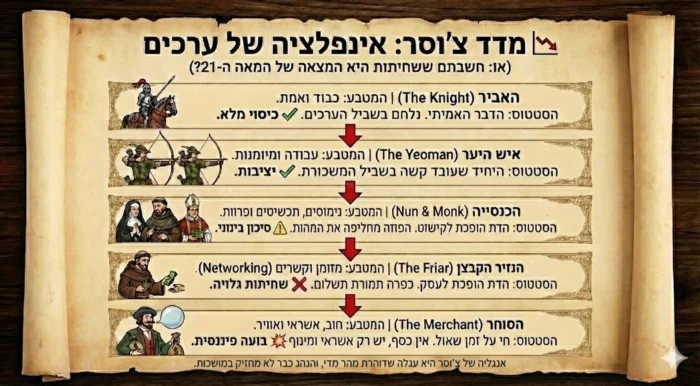
רגע לפני שאנחנו ממשיכים לדמויות הבאות בשיירה, שווה לעצור ולהביט לאחור. האבק שוקע אחרי שבע הדמויות הראשונות, ומשהו מתגלה בצידי הדרך לקנטרברי.
אם בתחילת הפרולוג עוד היו לנו חרבות ואידיאלים, ככל שאנחנו מתקדמים אנחנו נשארים בעיקר עם חשבוניות.
המסע של צ’וסר איננו רק גיאוגרפי. הוא מסע של חילוף.
ערכים מוחלפים בנראות. נראות מוחלפת בכסף. כסף מוחלף בחוב.
זה לא זמן ששוחק אנשים.
זה אנשים שמחליפים אמת בעטיפה.
1. האצולה: האידיאל מתעייף 🏇
התחלנו עם האביר, האיש שנלחם למען “אמת וכבוד”. הוא היה הדבר האמיתי, אבל הוא שייך לעולם הולך ונעלם.
הבן שלו, הסקוויר, כבר עסוק יותר בתלתלים ובשירה מאשר במלחמה.
השורה התחתונה: החרב עדיין חדה. היד שמחזיקה אותה כבר מחפשת מראה.
2. בתווך: איש היער 🏹
בין האצילים לאנשי הדת עומד לרגע איש אחד בירוק.
הוא פשוט עובד. בלי זהב, בלי הצגה, רק קשת ומיומנות.
הוא לא גיבור. הוא מדד.
הרגע האחרון לפני שהכול הופך למופע.
3. הכנסייה: החומר מחליף את הרוח 🕯️
משם עברנו לאנשי הדת.
נזירה שבוכה על עכברים אבל עונדת תכשיטים.
נזיר שמעדיף צלי צבי על תפילות.
מאה ומשהו שנים קודם לכן, הוועידה הלטרנית הרביעית עוד ניסתה להציב כללים ולשקם סמכות.
צ’וסר כבר כותב את דו"ח הכישלון.
השורה התחתונה: הקדושה הפכה לאסתטיקה.
אלוהים בפרטים הקטנים, והעניים מחוץ לפריים.
4. השוק: האמונה הופכת למזומן, ואז לאוויר 💰
ואז הגיעו אנשי העסקים. של אלוהים ושל הממון.
הנזיר הקבצן לימד אותנו שגאולה היא מוצר מדף עם תג מחיר.
הסוחר כבר לא מוכר סחורה. הוא מוכר ביטחון שאין לו כיסוי.
הוא חי על אשראי.
ועל האמונה שמישהו אחר יאמין בו מחר.
השורה התחתונה של המסע עד כה:
אידיאל ← נראות ← כסף ← חוב
וכשחוב הופך למצב תודעתי, האמת כבר מיותרת.
מספיק שמישהו ימשיך לספר את הסיפור.
אז מי מחזיק את הסיפור?
לא האצילים. הם עסוקים בדימוי.
לא אנשי הדת. הם עסוקים בלקוחות.
לא הסוחרים. הם עסוקים באשליה.
אנגליה של צ’וסר היא עגלה שדוהרת מהר מאוד,
והנהג כבר לא מחזיק במושכות.
בפרק הבא נפגוש אדם אחד שמחליט לרדת מהעגלה.
הוא רזה. הוא עני. והוא מעדיף ספרים על פני לחם.
הפקיד מאוקספורד.
🛑 Midway Stop: A Journey of Hollowing Out, or, Where Did the Ideals Go?
The eighth essay in the project Sivi Reads Chaucer.
Before we move on to the next figures in the company, it is worth pausing for a moment and looking back. The dust begins to settle after the first seven portraits, and something starts to appear along the road to Canterbury.
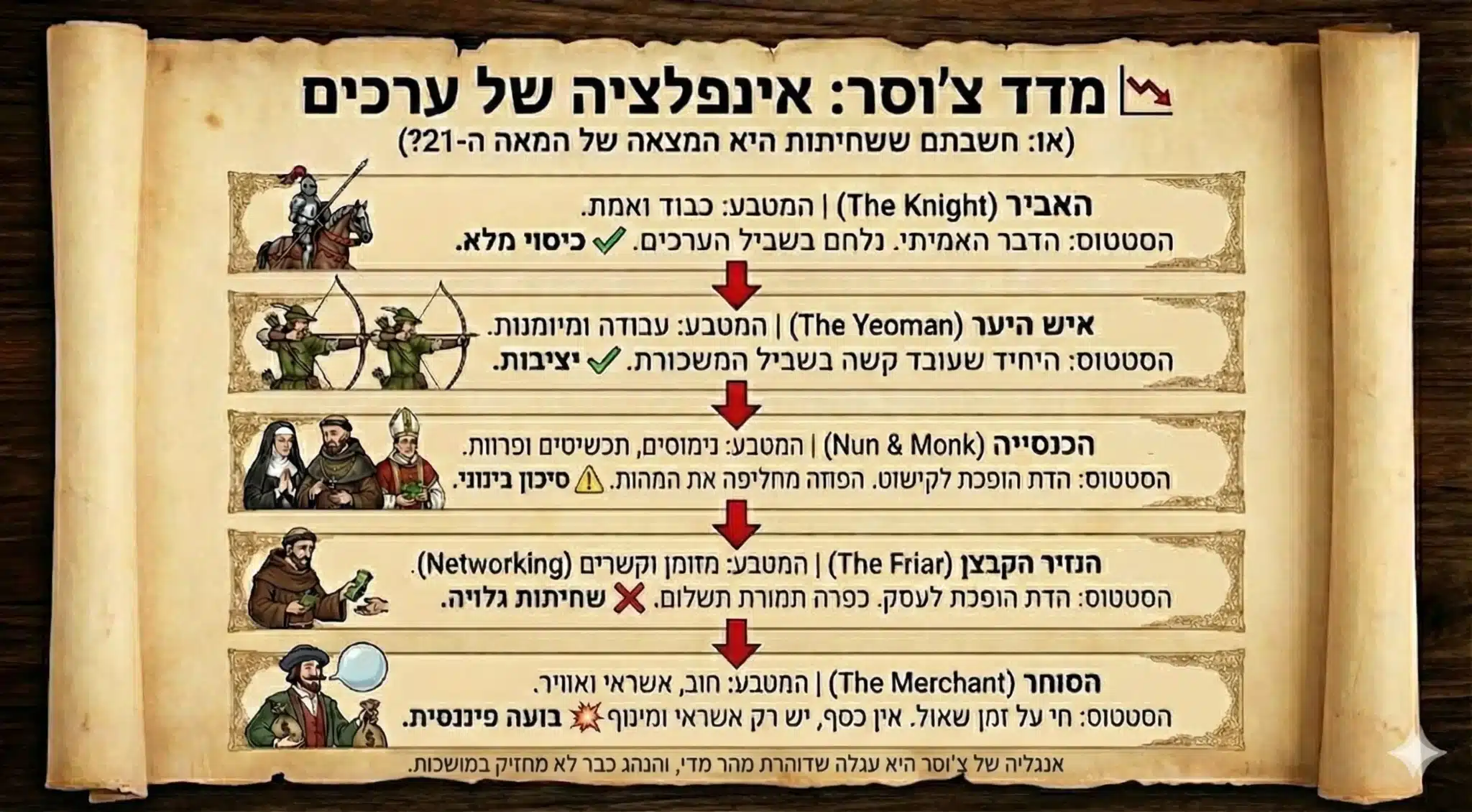
If, at the beginning of the General Prologue, we still had swords and ideals, the farther we move along, the more we are left with invoices. Chaucer’s journey is not only geographical. It is a journey of substitution.
Values are replaced by appearances.
Appearances are replaced by money.
Money is replaced by debt.
This is not the time to wear people down.
It is people replacing truth with packaging.
1. The aristocracy: the ideal grows tired 🏇
We began with the Knight, the man who fought for “truth and honor.” He was the real thing, but he belongs to a vanishing world.
His son, the Squire, is already more concerned with curls and song than with war.
The bottom line: the sword is still sharp. The hand holding it is already looking for a mirror.
2. In between: the Yeoman 🏹
Between the nobles and the clergy, there stands, briefly, one man in green.
He simply works. No gold, no performance, just a bow and skill.
He is not a hero. He is a measure.
The final moment before everything turns into a display.
3. The Church: matter replaces spirit 🕯️
From there, we moved to the religious figures.
A Prioress who cries over mice but wears jewelry.
A Monk who prefers roast venison to prayer.
A little over a hundred years earlier, the Fourth Lateran Council was still trying to lay down rules and restore authority.
Chaucer is already writing the report of failure.
The bottom line: holiness has turned into aesthetics.
God is in the fine details, and the poor are out of frame.
4. The market: faith becomes cash, and then thin air 💰
Then came the men of business, of God, and of money.
The Friar taught us that salvation is a shelf product with a price tag.
The Merchant no longer sells goods. He sells confidence that has no backing.
He lives on credit.
And on the faith that someone else will believe in him tomorrow.
The bottom line of the journey so far:
Ideal ← Appearance ← Money ← Debt
And when debt becomes a state of mind, truth is no longer necessary.
It is enough that someone keeps telling the story.
So who is holding the story together?
Not the nobles. They are busy with the image.
Not the clergy. They are busy with clients.
Not the merchants. They are busy with illusion.
Chaucer’s England is a cart racing forward at great speed,
and the driver no longer has hold of the reins.
In the next chapter, we will meet one man who decides to step off the cart.
He is thin. He is poor. And he prefers books to bread.
The Clerk of Oxford.
לגלות עוד מהאתר Sivi's Books
Subscribe to get the latest posts sent to your email.