For English review, please scroll down.
או: הרגע שבו התיאטרון בלע את המדינה
המערכה השלישית ב"ריצ'רד השלישי" איננה עוסקת במלחמה, אלא באלכימיה פוליטית. זהו השלב שבו המילים מפסיקות לתאר את המציאות ומתחילות לייצר אותה יש מאין. אם במערכה הראשונה ריצ'רד בנה את הדימוי שלו, ובשנייה ניצל את הוואקום שהותיר אחריו המלך המת, במערכה השלישית הוא כבר אינו פועל בתוך המערכת, אלא מחליף אותה.
זו יצירת מופת של ציניות שלטונית. המערכה חושפת את השלבים המדויקים שבהם הפיכה מתחפשת להליך חוקי, ורצח פוליטי מתחפש לצו אלוהי. משמעותו האמיתית של הכתר איננה הזכות לשלוט, אלא הזכות לקבוע מהי עובדה ומהי בגידה.
סיכום המהלך: מאשליה של חוק להולדתה של עריצות
במהלך שבע תמונות, שייקספיר מציג פירוק שיטתי של כל מה שהגדיר את אנגליה כאומה.
תמונות 1–2: עיוורון ואזהרות. הנסיך הילד נכנס ללונדון כשהוא מפקפק במבוגרים סביבו, בעוד הייסטינגס, הבטוח בכוחו, מבטל בזלזול את הנבואות על מותו הקרב.
תמונה 3: טקס המוות. ריברז, גריי ווהן מוצאים להורג בפומפרקט. החרבות אמנם עורפות אותם, אבל הקללות שלהם הופכות לעדות שאי אפשר להשתיק.
תמונה 4: התותים וגזר הדין. ישיבת מועצה שגרתית הופכת למלכודת מוות עבור הייסטינגס. הספק הופך לפשע, ומשפט אחד הופך לגזר דין.
תמונה 5: ההצגה מתחילה. ריצ'רד ובאקינגהאם עוטים שריונות חלודים ומשחקים פחד מדומה כדי להצדיק בדיעבד את רצח הייסטינגס בפני ראש העיר.
תמונה 6: האזהרה מן השוליים. הלבלר חושף את הבירוקרטיה של הרצח, המולבנת בניירת רשמית עוד בטרם התרחש הפשע.
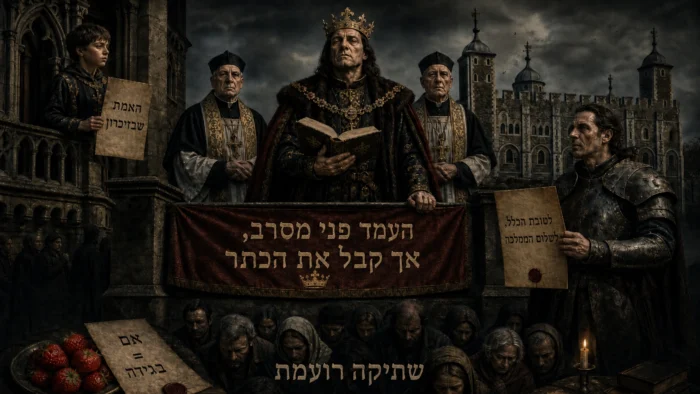
תמונה 7: הכתרת השקר. ריצ'רד עומד על המרפסת, בין שני כמרים, ומשחק את "הבתולה הסרבנית" שמקבלת עליה את הכתר רק מחוסר ברירה, מול עם מושתק.
ניתוח תמטי: המעבדה שבה נרצחה האמת
1. הילד שקורא את המציאות: הספק שמפרק את ההיסטוריה
תמונה 3.1 איננה רק מעבר של יורש עצר ללונדון. הילד אדוארד החמישי נושא עמו תמימות שיודעת, בזמן אמת, לשאול את השאלות שאסור לשאול. כשהוא מפקפק באמת ההיסטורית של מצודת לונדון, וטוען ש"האמת צריכה לחיות מדור לדור", הוא חותר תחת המנגנון שריצ'רד בונה.
כאן טמונה ביקורת עמוקה: הילד מציב שני משטרי אמת זה מול זה. מצד אחד, אמת כתובה, אמת של מסמכים, כרוניקות, ארכיונים וסמכות. מצד אחר, אמת חיה, שעוברת מפה לאוזן ונשמרת בזיכרון האנושי. זו איננה רק הערה על יוליוס קיסר או על המצודה. זו שאלה על מי באמת שומר את ההיסטוריה, הכתב או האדם.
במובן הזה הילד מגלם את הזיכרון העממי, הבלתי מתועד, את האמת ששורדת את הכרוניקות הרשמיות של המנצחים. ובאירוניה חדה, שייקספיר, שגם הוא כותב בתוך מסורת של שכתוב היסטורי, משתמש בילד כדי לזרוע ספק באמינותו של הטקסט הכתוב עצמו. עוד לפני שריצ'רד תופס את הכתר, שייקספיר כבר שותל את השאלה שתשלוט במערכה כולה: האם אמת נוצרת במסמך, או נשמרת בקול האנושי שמסרב להימחק.
2. ישיבת המועצה: כשספק נהפך לבגידה
הישיבה נפתחת כדיון מנהלי כמעט משעמם, אך הפעולה התיאטרלית של ריצ'רד שולחת אותה לתהום. כשהוא מבקש תותים מן הבישוף, הוא איננו מבקש פרי, אלא מסלק מן החדר את הסמכות המוסרית האחרונה.
ואז מגיע הלהטוט הלשוני הקטלני. ריצ'רד מציג את זרועו, שהייתה מעוותת מאז ומתמיד, כראיה ל"כישוף" של יריביו. כשהייסטינגס התמים אומר "אם הן עשו את זה, אדון יקר", המילה "אם" חותכת את גורלו. ריצ'רד מפרש את המחשבה העצמאית כבגידה. "לחתוך לו את הראש", הוא פוסק. באבחה אחת, השפה אינה מתארת עוד איום. היא עצמה הגרזן.
הייסטינגס איננו נופל רק מפני שהוא נאיבי. הוא נופל מפני שהוא ממשיך לפרש את המציאות כאילו כללי המשחק הישנים עדיין בתוקף. הוא מאמין שנאמנות, היררכיה, עבר משותף וקרבה לשלטון עדיין מעניקים הגנה. שייקספיר מראה כאן את ליבת הטרגדיה הפוליטית: אדם יכול להיות מנוסה, נאמן ואף פיקח, ובכל זאת להיכשל לגמרי, אם הוא קורא מציאות חדשה באמצעות שפה שכבר מתה.
הייסטינגס, שחיפש ישועה אצל אדם במקום אצל האל, נופל קורבן לעולם שבו החסד חדל להיות קדוש ונעשה תלוי בגחמה של שליט. זהו אחד הלקחים האכזריים של המערכה: הרוע האמיתי איננו צורח. הוא מחייך.
3. הקרקס הציבורי של הנאום והשקר
כאן שייקספיר מציג את ייצורו של השקר הציבורי. ריצ'רד ובאקינגהאם מעלים הצגה בתוך הצגה, עטויים בשריון ישן, כדי לשכנע את ראש העיר שרצח הייסטינגס היה פעולת מניעה הכרחית למען "שלום המדינה".
זה ההבדל בין מזימה פרטית לבין שקר שלטוני. מזימה יכולה להסתפק בהסתרה. משטר זקוק להצגה, לניירת, לעדים, לנאום, לאישור עירוני ולמראית עין של הכרח. לכן התמונה הזאת חשובה כל כך: היא מראה ששלטונו של ריצ'רד איננו נשען רק על אלימות, אלא על היכולת להעניק לאלימות צורה של סדר.
העולם נע אל מרחב של ייצוגים. הרצח כבר איננו מעשה שהנאום מפרש בדיעבד, אלא מעשה שהנאום מעניק לו משמעות, צורך ולגיטימציה. השלטון ממציא "עובדות", כמו שמועת ממזרותם של ילדי אדוארד, ושולח את באקינגהאם לשווק אותן. מה שהחל כתכסיס פוליטי נעשה כאן לאלכימיה: המילה מחליפה את הבשר, והסיפור הופך לאמת מפני שהוא מסופר היטב לקהל מפוחד.
4. הכתרת הדימוי והשתיקה הרועמת
כאן כבר לא מייצרים את השקר, אלא ממליכים אותו. ריצ'רד, הבמאי הגדול של עצמו, מופיע על המרפסת כאדם אדוק, ספר תפילה בידו ושני כמרים לצדו, כדי לייצר רגש במקום אמת. באקינגהאם נותן את ההוראה שמזקקת את כל התמונה: "שחק בתולה. תגיד 'לא'. ותיתן."
הם מנסים לחלץ מן העם את הקריאה "יחי המלך", אך נענים בשתיקה רועמת. זוהי שתיקה של "אבנים נושמות", שתיקה שאיננה נובעת מבורות אלא מהבנה ופחד. השתיקה בתמונה הזאת איננה היעדר תגובה, אלא תגובה פוליטית מרוקנת מכוח. העם מבין היטב מה מתרחש, אבל ההבנה איננה מיתרגמת להתנגדות. שייקספיר מצייר כאן ציבור שרואה את השקר, ובכל זאת מאפשר לו להפוך לטקס.
העם איננו שחקן אקטיבי בהצגה הזאת. הוא התפאורה שלה. כוחו של הכתר איננו רצון האל או רצון העם. הוא נולד משקר מתוזמר שצומח מתוך פחד ציבורי. הכתרת ריצ'רד איננה רגע של הסכמה, אלא רגע שבו השתיקה עצמה נעשית חומר גלם ללגיטימציה.
סיכום המערכה: העוול הגלוי והשתיקה המאפשרת
באחת התמונות הקצרות והמוזרות במערכה, תמונה 3.6, מופיע לבלר אוחז במסמך הרשעה מוכן מראש לאדם שהיה חופשי רק שעות ספורות קודם לכן. הוא מכריז את המסר הברור ביותר של המערכה:
עולם נורא כשכזה מין רפש
רואים, אבל רק בעיני הנפש.
הטרגדיה של ריצ'רד, ולמעשה הטרגדיה האנגלית כולה במחזה, איננה תוצאה של כוח מיסטי או גורל בלתי נמנע. היא נולדת מן הדף החתום, מן התעמולה, ממעשה הבמה של העריץ, ומקבלת את תוקפה מעצימת העיניים של ציבור שלם, המעדיף לשתוק מול עוולות שלטוניות גלויות.
המסך יורד על המערכה השלישית כאשר ריצ'רד אוחז בכתר. אבל הוא לא כבש מדינה. הוא כבש את הנרטיב שלה.
The Hour of Alchemy: Act III of Richard III
Or: The Moment Theatre Swallowed the State
Act III of Richard III is not about war, but about political alchemy. This is the stage in which words stop describing reality and begin creating it out of nothing. If in the first act Richard built his image, and in the second exploited the vacuum left behind by the dead king, in the third act he no longer operates within the system. He replaces it.
This is a masterpiece of governmental cynicism. The act exposes, with terrifying precision, the stages by which a coup disguises itself as legal procedure, and political murder disguises itself as divine decree. The true meaning of the crown is not the right to rule, but the right to determine what counts as fact and what counts as treason.
Summary of the Movement: From the Illusion of Law to the Birth of Tyranny
Across seven scenes, Shakespeare presents the systematic dismantling of everything that defined England as a nation.
Scenes 1–2: Blindness and Warnings.
The young prince enters London while questioning the adults around him, while Hastings, confident in his own power, dismisses with contempt the prophecies of his approaching death.
Scene 3: The Ritual of Death.
Rivers, Grey and Vaughan are executed at Pomfret. The swords may sever their heads, but their curses become testimony that cannot be silenced.
Scene 4: The Strawberries and the Sentence.
A routine council meeting turns into a death trap for Hastings. Doubt becomes a crime, and one sentence becomes a death warrant.
Scene 5: The Performance Begins.
Richard and Buckingham put on rusty armor and perform simulated fear in order to justify, after the fact, Hastings’s murder before the Lord Mayor.
Scene 6: The Warning from the Margins.
The Scrivener exposes the bureaucracy of murder, whitewashed in official paperwork before the crime has even taken place.
Scene 7: The Coronation of the Lie.
Richard stands on the balcony between two priests and plays the “reluctant virgin,” accepting the crown only under supposed compulsion, before a silenced people.
Thematic Analysis: The Laboratory in Which Truth Was Murdered
The Child Who Reads Reality: Doubt That Dismantles History
Scene 3.1 is not merely the passage of an heir apparent into London. The young Edward V carries with him a kind of innocence that knows, in real time, how to ask the questions that must not be asked. When he questions the historical truth of the Tower of London and claims that truth should live from age to age, he undermines the very mechanism Richard is building.
Here lies a deep critique: the child sets two regimes of truth against one another. On one side stands written truth, the truth of documents, chronicles, archives and authority. On the other stands living truth, passed from mouth to mouth and preserved in human memory. This is not merely a comment about Julius Caesar or the Tower. It is a question about who truly preserves history: the written record, or the human voice.
In this sense, the child embodies popular memory, undocumented and unofficial, the truth that survives the official chronicles of the victors. And with sharp irony, Shakespeare, who himself writes within a tradition of historical rewriting, uses the child to plant doubt in the reliability of the written text itself. Before Richard even seizes the crown, Shakespeare has already planted the question that will govern the entire act: is truth created in the document, or preserved in the human voice that refuses to be erased?
The Council Meeting: When Doubt Becomes Treason
The meeting begins as an almost dull administrative discussion, but Richard’s theatrical action sends it into the abyss. When he asks the Bishop for strawberries, he is not asking for fruit. He is removing from the room the last remaining moral authority.
Then comes the deadly linguistic trick. Richard displays his arm, which has been deformed since birth, as evidence of his enemies’ “witchcraft.” When the innocent Hastings says, “If they have done this deed, my noble lord,” the word “if” seals his fate. Richard interprets independent thought as treason. “Off with his head,” he declares. In a single stroke, language no longer describes a threat. Language itself becomes the axe.
Hastings does not fall merely because he is naïve. He falls because he continues to interpret reality as though the old rules of the game still apply. He believes that loyalty, hierarchy, shared history and proximity to power still offer protection. Shakespeare reveals here the core of political tragedy: a person can be experienced, loyal and even intelligent, and still fail completely if he reads a new reality through a language that has already died.
Hastings, who sought salvation in a man rather than in God, becomes the victim of a world in which grace has ceased to be sacred and has become dependent on the whim of a ruler. This is one of the act’s cruelest lessons: true evil does not scream. It smiles.
The Public Circus of Speech and Lies
Here Shakespeare presents the manufacture of the public lie. Richard and Buckingham stage a play within a play, dressed in old armor, in order to convince the Lord Mayor that Hastings’s murder was a necessary act of prevention for the “peace of the state.”
This is the difference between a private conspiracy and a governmental lie. A conspiracy may survive through concealment. A regime needs performance, paperwork, witnesses, speeches, civic approval and the appearance of necessity. That is why this scene matters so much: it shows that Richard’s rule does not rest only on violence, but on the ability to give violence the form of order.
The world moves into a space of representations. Murder is no longer an act that speech interprets afterward, but an act that speech grants meaning, necessity and legitimacy. The regime invents “facts,” such as the rumor of Edward’s children’s illegitimacy, and sends Buckingham to sell them. What began as a political maneuver becomes alchemy: the word replaces the flesh, and the story becomes truth because it is told well to a frightened audience.
The Coronation of the Image and the Roaring Silence
At this point, they are no longer manufacturing the lie. They are crowning it. Richard, the great director of himself, appears on the balcony as a devout man, prayer book in hand and two priests beside him, in order to produce emotion in place of truth. Buckingham gives the instruction that distills the entire scene: play the virgin, say no, and take it.
They try to extract from the people the cry “Long live King Richard,” but are answered by roaring silence. This is the silence of “breathing stones,” a silence born not from ignorance but from understanding and fear. The silence in this scene is not the absence of response, but a political response emptied of power. The people understand very well what is happening, but understanding does not turn into resistance. Shakespeare depicts a public that sees the lie and still allows it to become ritual.
The people are not active players in this performance. They are its scenery. The power of the crown is born neither from the will of God nor from the will of the people. It is born from an orchestrated lie growing out of public fear. Richard’s coronation is not a moment of consent, but a moment in which silence itself becomes raw material for legitimacy.
Conclusion: Visible Injustice and the Silence That Enables It
In one of the shortest and strangest scenes in the act, Scene 3.6, a Scrivener appears holding a prepared indictment for a man who had been free only hours earlier. He states the clearest message of the act:
A terrible world, where such foulness is seen,
yet only by the inward eye.
The tragedy of Richard, and in fact the tragedy of England in the play, is not the result of mystical power or unavoidable fate. It is born from the signed document, from propaganda, from the tyrant’s stagecraft, and receives its force from the collective closing of eyes by an entire public that prefers silence in the face of open governmental injustice.
The curtain falls on Act III with Richard holding the crown. But he has not conquered a state. He has conquered its narrative.
לגלות עוד מהאתר Sivi's Books
Subscribe to get the latest posts sent to your email.

2 מחשבות על “שעת האלכימיה: המערכה השלישית של ריצ'רד השלישי”
מדהים איך הפוליטיקה כמעט לא משתנה במהלך השנים…
בהחלט זה משל למצבנו