Please scroll down for an English review.
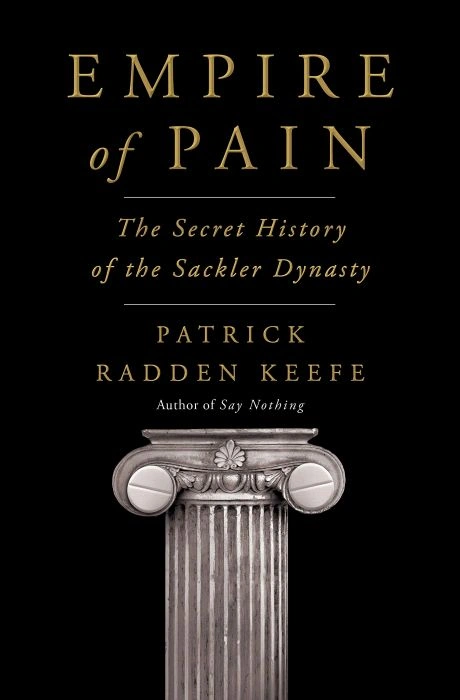
Empire of Pain, מאת פטריק ראדן קיף, עוסק במשפחת סאקלר, בפרדו פארמה ובתפקידה של אוקסיקונטין במשבר האופיואידים בארצות הברית.
זהו ספר שחושף מעשים חמורים: הטעיה, שיווק כוחני, טשטוש סכנת ההתמכרות, לחץ על רופאים ומרדף אחר מכירות גם כאשר נזקי התרופה כבר נעשו גלויים.
עם זאת, בהדרגה התחקיר משנה את אופיו. קיף מפסיק להבחין בין מי שקיבלו החלטות, מי שהיו מעורבים באופן חלקי, מי שנהנו מן ההון המשפחתי ומי שמתו עוד לפני השקת התרופה. כל מעשה, שתיקה, תרומה או יצירה של מי מבני המשפחה נהפכים לעוד סעיף בכתב אישום שושלתי.
מה שצריך לדעת
תחקיר מאת Patrick Radden Keefe על משפחת סאקלר, חברת Purdue Pharma, שיווק אוקסיקונטין ותפקידה של התרופה במשבר האופיואידים בארצות הברית.
לקוראים שמתעניינים בתחקירים עיתונאיים, פשע תאגידי, תעשיית התרופות, היסטוריה אמריקאית, כוח משפחתי והקשרים שבין כסף, רפואה, רגולציה ופילנתרופיה.
היקף החומר שקיף אסף, המסמכים והעדויות, וחשיפת שיטות השיווק של פרדו, טשטוש סכנת ההתמכרות והלחץ שהופעל כדי להגדיל מרשמים ומינונים.
הספר מטשטש את ההבדלים בין בני המשפחה והופך אחריות אישית לאשמה שושלתית. הטון המרשיע, ההכוונה המתמדת של הקורא והעיסוק המצומצם בתועלת הרפואית ובאחריותם של גורמים נוספים מחלישים את התחקיר.
פטריק ראדן קיף אסף חומר עצום: מסמכים פנימיים, עדויות, הליכים משפטיים, תכתובות משפחתיות ותיעוד של קשרי החברה עם רופאים, רגולטורים, אוניברסיטאות ומוזיאונים. מן הממצאים מצטיירת תמונה חמורה. פרדו פארמה טשטשה את סכנת ההתמכרות, שיווקה את אוקסיקונטין באגרסיביות ולחצה על רופאים להגדיל את מספר המרשמים ואת המינונים. סימני אזהרה נדחקו הצדה, ומבקרים, עיתונאים, תובעים ואנשי מקצוע הוצגו כאויבים שיש להחליש את אמינותם.
ריצ׳רד סאקלר מצטייר כאדם אובססיבי למכירות, לשליטה ולצמיחה. הוא היה מעורב ישירות בניהול פרדו, לחץ על אנשי החברה, דרש הסברים לכל ירידה במכירות והמשיך להתערב גם לאחר שעזב את תפקידיו הרשמיים. מבחינתו, העולם הצטמצם לשאלה אחת: כיצד מגינים על המוצר ועל המפעל המשפחתי.
כתב האישום נגד ריצ׳רד מבוסס היטב. ביקורת חריפה עליו מוצדקת לחלוטין.
זהו חומר מצוין לתחקיר עיתונאי ולספר ממדרגה ראשונה.
קיף לא הסתפק בו.
הבעיה אינה האשמתו של ריצ׳רד. הבעיה מתחילה כאשר האשמה מתרחבת ממנו אל שושלת שלמה. הביקורת שלי אינה על חשיפת פרדו ועל הנזק שגרמה. היא על הכלי שקיף בחר: כתב אישום משפחתי שמטשטש הבחנות ומחיל אשמה על אנשים שלא קיבלו את אותן החלטות, ולעיתים לא קיבלו החלטות כלל.
צדק שנבנה על כלים פגומים אינו מתחזק.
הוא נחלש.
עוול חדש בשם תיקונו של עוול קודם, העובדות לא הספיקו למחבר
אחת הביקורות על הספר ניסחה היטב את הכשל: העובדות היו צריכות לעמוד לבדן. אבל נראה שהסופר לא רצה לקחת את הסיכון.
העובדות אכן יכלו לעמוד בכוחות עצמן.
קיף אינו נותן להן את ההזדמנות.
הוא מפרש ללא הרף. מוסיף עקיצה. מכוון את הקורא. מסמן למי ראוי לבוז. כל פרט משפחתי נדחף אל תוך התזה, וכל התנהגות הופכת לתחמושת.
תגובה מצד המשפחה מוצגת כניסיון לשלוט בנרטיב.
שתיקה מוצגת כהתחמקות.
תרומה נעשית הלבנת שם.
התנגדות להסרת השם מוצגת כיהירות וכעיוורון מוסרי.
יצירה אמנותית של אחת מבנות המשפחה נעשית המשך של המפעל המשפחתי באמצעים אחרים.
כך נוצרת מערכת פרשנית סגורה שבה שום פעולה אינה יכולה להתקיים בתוכה באופן ניטרלי. פסק הדין נכתב מראש, והספר עובר פרט אחר פרט כדי לצרף אותו לכתב האישום.
זו כתיבה שאינה סומכת על העובדות, ואינה סומכת על חופש המחשבה של הקורא.
ארתור סאקלר מת לפני אוקסיקונטין
הספר מתאמץ להפוך את משפחת סאקלר לשושלת אחת, בעלת אב מייסד וחטא קדמון אחד.
ארתור סאקלר ממלא תפקיד מרכזי במבנה הזה.
ארתור מת בשנת 1987.
אוקסיקונטין הושק בשנת 1996.
פער של כמעט עשור מפריד בין מותו לבין השקת התרופה.
ארתור לא ניהל את פרדו בתקופת אוקסיקונטין. הוא לא ראה את נתוני ההתמכרות שנאספו בשנות האלפיים. הוא לא השתתף בדיונים על שינוי הטבלייה בשנת 2010. הוא לא עקב אחר המעבר להרואין. הוא לא לחץ להגדיל את מכירות המוצר לאחר ההסדרים המשפטיים.
ארתור מת. מת. מת.
אפשר לבקר אותו על שיטות השיווק שפיתח. הוא טשטש גבולות בין פרסום, רפואה, מחקר ומסחר. הוא הבין כיצד לעצב שיח רפואי סביב מוצר, ותרם ליצירת תרבות עסקית מסוכנת.
האחריות הזאת מוגדרת היטב.
קיף דוחף אותה מעבר לגבולותיה. ארתור נהפך בדיעבד לאדריכל של אסון שהתרחש לאחר מותו. קשר היסטורי מקבל אצל המחבר צורה של אשמה ישירה.
ההרחבה הזאת משרתת את המבנה הספרותי שקיף בנה, אך פוגעת בצדק ובדיוק ההיסטורי.
אדם אינו נושא באחריות להחלטות שהתקבלו לאחר מותו רק מפני שהניח תשתית שמישהו אחר ניצל.
הספר רוצה שושלת. השושלת דורשת אב מייסד. העובדות נאלצות להתאים את עצמן למבנה הספרותי.
אשמה אינה עוברת בירושה
היחס למדלן סאקלר חושף את הבעיה העמוקה בספר.
מדלן יצרה סרט תיעודי על אסירים. הסרט העניק במה לאנשים שהחברה כמעט אינה מקשיבה להם. מקור המימון רלוונטי. זכות היתר שלה רלוונטית. ההון המשפחתי רלוונטי.
כל אלה אינם הופכים אותה לאחראית להחלטות שקיבלו אחרים בפרדו רק משום שנולדה למשפחת סאקלר.
נאן גולדין הגיעה להקרנת הסרט עם פעילים ובקבוקי תרופות. היא כינתה את הסרט "reputation washing". לדבריה:
"She presents herself as a social activist but she has been enriched through the addiction of hundreds of thousands of people."
גולדין הרחיבה את הטענה. כל יורש שקיבל כסף ולא יצא נגד המשפחה הוגדר בעיניה כ־"culpable".
אשם.
המילה הזאת משנה את הדיון.
בנקודה הזאת האקטיביזם של גולדין חצה את הגבול שבין דרישה לאחריות לבין רדיפה. המאבק במעשים של פרדו הפך למאבק בלגיטימיות של כל אדם שנולד למשפחת סאקלר.
יורש עשוי ליהנות מהון שנצבר בדרכים בעייתיות. הוא עשוי לחיות ברווחה ובעושר בזכות החלטות מוסריות פסולות של אחרים. אפשר לדרוש ממנו שקיפות. אפשר לשאול כיצד הוא משתמש בכוח שניתן לו. אפשר לבקר התנכרות למציאות, סירוב להכיר במקור הכסף או הימנעות מתגובה מוסרית.
אשמה דורשת מעשה אישי.
מדלן לא שיווקה אוקסיקונטין. היא לא ניהלה את פרדו. היא לא הונתה רגולטורים. היא לא קבעה יעדי מכירות. הסרט שלה אינו סעיף בכתב האישום נגד ריצ׳רד סאקלר.
חמור מכך, הוחל עליה כלל מוסרי שכמעט אינו מוחל על יורשיהם של בעלי הון אחרים. ילדיהם של בעלי תאגידים אינם נדרשים בדרך כלל לתת דין וחשבון על תנאי ההעסקה, הפגיעה הסביבתית, ניצול העובדים או שיטות צבירת ההון של הוריהם. איש אינו דורש מילדיו של ג׳ף בזוס להתייצב בפני הציבור ולהסביר את תנאי העבודה באמזון. יורשיהם של בעלי חברות נפט, רשתות קמעונאות ותאגידי אופנה אינם נרדפים באירועי תרבות עד שיגנו את משפחתם ויקדישו את הונם לתיקון הנזקים שיצרו אחרים.
ממדלן נדרש דבר אחר. עצם קבלת הכסף הפכה אותה לחשודה. שתיקתה הפכה לראיה. סירובה להפוך את חייה למסע כפרה משפחתי הוצג כהמשך של הפשע.
זהו סטנדרט כפול, שהוחל עליה משום שהמשפחה הפכה לשק חבטות של הציבור בלי שום אבחנה. במקום לבחון את מעשיה, בחנו את משפחתה. במקום לשפוט את הסרט, שפטו את חשבון הבנק שמאחוריו.
הספר מבטל את ההבחנה בין היוצר, היצירה ומקור המימון שלו. שם המשפחה נעשה ראיה. הירושה נעשית שותפות. השתיקה נעשית הודאה.
זו תפיסה עתיקה, כמעט שבטית. החטא דבק בדם ועובר לדור הבא.
החברה המודרנית אמורה הייתה להתקדם מעבר לכך.
קאתי סאקלר והזכות להיות אדם נפרד
בדיון בקונגרס אומרת קאתי סאקלר:
"The Sackler family doesn’t have a felony conviction. Purdue Pharma has a felony conviction. I am an individual person."
הספר מציג את הטענה שלה כמעט כהוכחה לאטימותם של בני המשפחה.
קאתי הייתה מעורבת בפרדו, ולכן מעשיה והחלטותיה ראויים לבדיקה קפדנית ואישית. הטענה שלה אינה פוטרת אותה מאחריות. היא קובעת עיקרון בסיסי: הרשעתה של חברה אינה הרשעה אוטומטית של משפחה שלמה.
קיף שומע בעיקר התחמקות. הוא ממסגר את כלל המשפחה.
באותו דיון אומר אחד מחברי הקונגרס:
"I’m not sure that I’m aware of any family in America that’s more evil than yours."
משפחה שלמה מוגדרת כרעה.
קיף אינו נרתע מן האמירה הקשה הזו. הוא מעניק לה במה דרמטית, כמעט טקסית.
צדק זקוק להבחנות.
תיאטרון זקוק לנבלים.
שתיקה מול סופר אינה הודאה
קיף מתלונן שוב ושוב על סירובה של המשפחה לדבר איתו. הוא מתאר "frosty silence", מדגיש את סירובם להתראיין ומעניק גם לניסיונות משפטיים להציב גבולות גוון מאיים.
ראוי לזכור עובדה פשוטה: המשפחה אינה חייבת לו דבר. בוודאי שאינה חייבת להעניק לו את החותמת הסופית על מעמדו כמספר הרשמי של סיפורה.
קיף אינו שופט. הוא אינו תובע, רגולטור או ועדת חקירה. הוא סופר ועיתונאי שפרסם כתבה מרשיעה על המשפחה, ולאחר מכן הפך אותה לספר.
זכותו לחקור.
זכותם לסרב לשתף איתו פעולה.
ראיון היה מעניק לו הכרה כסמכות שבפניה עליהם להסביר את עצמם, ומספק לו ציטוטים וחומר נוסף לסיפור שכבר בנה.
מבחינתם, עוד עיתונאי ועוד ספר לא הצדיקו כניסה מחודשת לזירה שכבר הפכה עוינת לחלוטין. השתיקה הייתה בחירה אסטרטגית סבירה. ייתכן שגם הייתה הדרך היחידה למנוע מקיף להפוך כל תגובה שלהם לעוד חומר בתוך העלילה שכבר בנה.
הם סירבו להשתתף בהכתרתו כמספר המוסמך של חייהם.
החוצפה של קיף אינה טמונה בעצם בקשת התגובה. עיתונאי רשאי לבקש תגובה. היא טמונה בציפייה שהמשפחה תכיר בו כסמכות על חייה ועל ההיסטוריה שלה, ובשימוש בסירובה להעניק לו את הגושפנקה כראיה נוספת נגדה.
הספר מתייחס לבחירה הזאת כאילו הייתה חלק מן האשמה.
המחבר מכניס את עצמו לתפקיד הקורבן
באחרית הדבר מספר קיף על אדם שישב ברכב סמוך לביתו.
שכנה הבחינה בו. קיף ומשפחתו צילמו אותו. האיש חזר, אולי, פעם נוספת. שום ראיה לא קשרה אותו למשפחת סאקלר.
קיף כותב זאת במפורש.
פרדו הכחישה כל קשר.
נציג המשפחה סירב להגיב.
הסירוב מקבל מיד משמעות חשודה.
קיף קושר את האירוע למעקב אחר נאן גולדין ופעילה נוספת. מבחינתו, הדמיון בין המקרים רומז על גורם משותף. את הקשר הזה אין ביכולתו להוכיח.
ואז מגיע העץ.
האיש נהג לחנות מתחת לעץ שהעניק לו צל. סערה עקרה את העץ. קיף כותב שקיווה שהאיש יחזור, יראה את העץ ההרוס ויתהה אם כוח עליון מנסה לומר לו משהו.
זהו רגע מביך.
בשלב הזה הרגשתי שהעיסוק של קיף במשפחה כבר מקבל אופי אובססיבי. הוא מכניס את עצמו אל מרכז הדרמה. אויב מסתורי עוקב אחר ביתו. בניו עומדים בחלון עם משקפות. הטבע עצמו שולח לאיש החשוד מסר מאיים.
בהיעדר ראיות, קיף בונה אווירה.
הספק נעשה רמז.
הרמז נעשה חלק מן הסיפור על המשפחה המאיימת.
העובדות נגמרות.
המיתולוגיה מתחילה.
אותו דפוס חוזר בסצנה המתרחשת באחוזתה של משפחת סאקלר. אדם שהתמכר לאוקסיקונטין מספר שעבד בשטח האחוזה והשתמש בתרופה בתוך רכב העבודה. עץ בחצר השיר ענפים, והעובדים נדרשו לפנות כל עלה.
הסמליות מושלמת מדי.
המשפחה חיה באחוזה נקייה. העובדים מפנים את הלכלוך. המכור נמצא ממש בחצר האחורית. העלים נעלמים כדי לשמר מראית עין מושלמת.
האירועים הללו הופכים לקביים של התזה. קיף מעצב אותם כמשל מוסרי שתפור בדיוק למידותיה, ואינו מניח לעובדות להתקיים בלי לכפות עליהן משמעות סמלית.
במקום לחקור את הסיפור, הוא מבקש להיות אחת הדמויות המרכזיות בו.
הספר מודה במה שהשאיר בחוץ
באחרית הדבר כותב קיף:
"There are aspects of the public health crisis that this book gives scant attention to."
הוא מודה שהספר מעניק תשומת לב מועטה למדע ההתמכרות, לדרכי הטיפול, להפחתת נזק, להתמודדות היומיומית של אנשים מכורים ולשאלת הערך הטיפולי של אופיואידים עבור הסובלים מכאב כרוני חמור.
אז במה הספר עוסק בדיוק? ולאיזו מטרה הוא נכתב?
אלה אינם פרטים שוליים. בלעדיהם אי אפשר להבין למי התרופה הועילה, כיצד אנשים התמכרו, אילו גורמים השתתפו ביצירת המשבר וכיצד התחלקה האחריות ביניהם.
אוקסיקונטין סייעה לחלק מן המטופלים. היא אפשרה לאנשים שסבלו מכאב קשה לעבוד, לישון, לתפקד ולנהל שגרת חיים. היא אפשרה לחולים סופניים למות עם פחות סבל.
חלק מן המשתמשים נטלו אותה בהתאם למרשם ובכל זאת פיתחו תלות והתמכרות.
אחרים כתשו, הסניפו, המיסו או הזריקו אותה כדי להשיג השפעה מהירה.
אלה מסלולים שונים. הנסיבות שונות. המעשים שונים. גם האחריות שונה.
קיף מזכיר רופאים, רגולטורים, מפיצים, בתי מרקחת ומשתמשים, אך הם נשארים דמויות משנה בסאגה שבנה על הסאקלרים.
כך מתבררת מטרתו האמיתית של הספר. הוא אינו מבקש להציג תמונה מקיפה של משבר האופיואידים. הוא מבקש לבנות כתב אישום נגד שושלת משפחתית. כל מרכיב שעלול לסבך את כתב האישום, להכניס לתוכו תועלת רפואית, אחריות משותפת או מדרגות שונות של אשמה, מקבל "תשומת לב מועטה".
מותר למחבר לבחור מוקד. הבחירה אינה מעניקה לו רשות להציג תמונה חלקית בטון של פסק דין כולל.
רק באחרית הדבר הוא מבהיר לקורא כמה חלקים חיוניים נשארו מחוץ למסגרת.
זו אינה השמטה שולית.
זהו הבסיס שעליו נבנתה התזה.
הפילנתרופיה סיפקה תועלת אמיתית
משפחת סאקלר מימנה מוזיאונים, אוניברסיטאות, בתי חולים, מחקרים, אוספים ותוכניות רפואיות.
הציבור קיבל בתמורה ערך ממשי.
מבנים נבנו. מחקרים מומנו. יצירות הוצגו. תוכניות רפואיות קמו. חוקרים קיבלו משאבים. אנשים נהנו ממוסדות שלא היו מתקיימים באותה צורה ללא ההון הזה.
המחאה נגד המשפחה התייחסה לתרומות כאילו ערכן התאדה ברגע שמקור הכסף נעשה מביך, אף שהגופים השונים לא החזירו את התרומות או את שוויין.
המוזיאונים שמרו את הכסף.
האוניברסיטאות שמרו את הבניינים.
בתי החולים המשיכו ליהנות מן המחקרים.
הציבור המשיך להשתמש במוסדות.
שם המשפחה הוסר.
כך נוצר טקס טיהור זול במיוחד. האותיות יורדות מן הקיר. התרומה נשארת בידי המוסדות הנהנים ממנה, ואלה זוכים למחיאות כפיים על אומץ לבם המוסרי.
כמעט איש אינו שואל אם הסרת השם מפרה את ההסכם שנכרת עם התורמים. איש אינו מחזיר את התרומה, מפרק את האגף או מוותר על התועלת שהכסף יצר.
אם השם מזהם את המבנה, גם הכסף שהקים אותו אמור לעורר שאלה.
השאלה הזאת כמעט אינה נשאלת.
נוח יותר לשמור את השיש ולהסיר את הלוחית.
מוסר עם הנהלת חשבונות יצירתית.
ההתנהלות הזאת עלולה להעביר מסר בעייתי גם לתורמים אחרים: המוסד ישמור את הכסף, אך ההנצחה שהובטחה בתמורה תלויה באקלים הציבורי. מי שילמד מן הסיפור הזה עשוי לבחור להשאיר את הונו בתוך המשפחה במקום להעביר חלק ממנו לציבור.
הניצחון על הסאקלרים הפך לסמלי.
בטווח הרחוק, הציבור מפסיד.
"May his name be erased"
לקראת סוף הפרק מתאר קיף את הסרת שם המשפחה מן המטרופוליטן.
הוא מביא ביטוי מן המסורת היהודית:
"Yimakh shemo."
"May his name be erased."
הביטוי הזה שמור למי שביצעו את הרעות החמורות ביותר. זו קללה המבקשת למחוק את שמו של אדם מן הזיכרון.
קיף מציב אותה ברגע הניצחון של נאן גולדין.
הבחירה הזאת חושפת את מהות המהלך כולו.
ארתור, ריימונד, מורטימר, הילדים, הנכדים, אנשי העסקים, התורמים והאמנים נדחסים כולם לתוך זהות משפחתית אחת, שהיעלמותה מן המרחב הציבורי מוצגת כהישג מוסרי.
הספר חוגג את הרגע.
הקירות נקיים.
האותיות נעלמו.
גולדין יכולה שוב ליהנות מן המוזיאון בלי “ריח המוות”.
השם נמחק, ואיתו גם ההקשר ההיסטורי והמורשת המורכבת.
המחיקה אינה מספרת את ההיסטוריה. היא משטיחה אותה.
היא משאירה את המוסד עם פירות התרומה ומעלימה מן הקיר את האדם ואת המשפחה שהעניקו אותה.
זו אסתטיקה של טיהור.
הקיר נראה נקי יותר.
ההיסטוריה נעשית שקרית יותר.
כשהספר מאבד את זכותו המוסרית
הטון של קיף נעשה מרשיע יותר ככל שהספר מתקדם.
ג׳יליאן סאקלר מנסה להבחין בין בעלה המנוח לבין בני המשפחה שניהלו את פרדו בתקופת אוקסיקונטין. מכתביה מתוארים כ־"shrill". מאבקה מוצג כפתטי. בני המשפחה שמנסים לאכוף הסכמי תרומה מתוארים כמי ש־"debase themselves". סטודנטים מוחאים כפיים בזמן שהאותיות מוסרות בפטיש ובאזמל. על הקירות נשארים "ghost marks".
קיף בוחר כל פרט כדי להעצים את תחושת הנפילה.
זה כתוב היטב.
זו בדיוק הבעיה.
הכתיבה אינה מסתפקת בתיאור ההשפלה. היא מתענגת עליה. קיף מציג את השפלת המשפחה כרגע של טיהור ציבורי.
בכך הוא מחמיץ את המורכבות האנושית של הסיפור.
משפחת סאקלר תרמה תרומה משמעותית לרפואה, למחקר ולאמנות. בו בזמן, בני משפחה מסוימים קיבלו החלטות הרסניות.
שתי העובדות יכולות להתקיים יחד.
קיף מעדיף את המילה רוע.
המילה מספקת זעם. היא מסבירה מעט מאוד.
Empire of Pain מכיל תחקיר חשוב. כוחו טמון בחומרים שאסף ובמעשים שחשף. חולשתו מתחילה ברגע שבו הוא חדל להסתפק בהם.
קיף ביקש לכתוב על משפחה שאיבדה את היכולת לראות את הנזק שגרמה.
בדרך הוא איבד את היכולת לראות משהו מעבר לדחף להאשים, להשפיל ולמחוק.
הספר דורש צדק.
ואני שואלת: למי?
Empire of Pain: The Secret History of the Sackler Dynasty / Patrick Radden Keefe
Empire of Pain by Patrick Radden Keefe examines the Sackler family, Purdue Pharma, and the role OxyContin played in the opioid crisis in the United States.
The book exposes serious wrongdoing: deception, aggressive marketing, the obscuring of addiction risks, pressure placed on doctors, and a relentless pursuit of sales even after the damage caused by the drug had become visible.
Gradually, however, the investigation changes its character.
Keefe stops distinguishing between those who made decisions, those who were only partially involved, those who benefited from the family fortune, and those who died before the drug was even launched. Every action, silence, donation, or creative work by a member of the family becomes another item in a dynastic indictment.
Patrick Radden Keefe gathered an enormous amount of material: internal documents, testimony, legal proceedings, family correspondence, and records of Purdue’s relationships with doctors, regulators, universities, and museums.
The evidence presents a grave picture. Purdue Pharma obscured the dangers of addiction, marketed OxyContin aggressively, and pressured doctors to increase prescriptions and dosages. Warning signs were pushed aside, while critics, journalists, prosecutors, and professionals were treated as enemies whose credibility had to be weakened.
Richard Sackler emerges as a man obsessed with sales, control, and growth. He was directly involved in Purdue’s management, pressured company employees, demanded explanations for every decline in sales, and continued to intervene even after leaving his official positions.
For him, the world appeared to narrow into one question: how could the product and the family enterprise be protected?
The case against Richard is well supported. Severe criticism of him is entirely justified.
This is excellent material for investigative journalism and for a first-rate book.
Keefe was not satisfied with it.
The problem is not his accusation of Richard. The problem begins when responsibility expands from Richard to an entire dynasty.
My criticism is not directed at the exposure of Purdue or at the damage the company caused. It is directed at the instrument Keefe chose: a familial indictment that erases distinctions and imposes guilt on people who did not make the same decisions, and in some cases made no decisions at all.
Justice built with defective tools does not become stronger.
It becomes weaker.
A New Injustice in the Name of Correcting an Earlier One
The Facts Were Not Enough for the Author
One review of the book identified the failure precisely: the facts should have been allowed to stand on their own. Yet the author seems unwilling to take that risk.
The facts could indeed have stood on their own.
Keefe does not give them the opportunity.
He interprets constantly. He adds a barb. He directs the reader. He indicates who deserves contempt. Every family detail is pushed into the thesis, and every form of behaviour becomes ammunition.
A response from the family is presented as an attempt to control the narrative.
Silence is presented as evasion.
A donation becomes reputation laundering.
Opposition to removing the family name becomes arrogance and moral blindness.
A work of art by one of the family’s descendants becomes a continuation of the family enterprise by other means.
This creates a closed interpretive system in which no action can exist neutrally. The verdict has already been written, and the book moves from detail to detail in order to attach each one to the indictment.
This is writing that does not trust the facts and does not trust the reader’s freedom of thought.
Arthur Sackler Died Before OxyContin
The book works hard to transform the Sacklers into a single dynasty with one founding father and one original sin.
Arthur Sackler plays a central role in that structure.
Arthur died in 1987.
OxyContin was launched in 1996.
Almost a decade separates his death from the drug’s introduction.
Arthur did not manage Purdue during the OxyContin era. He did not see the addiction data collected during the 2000s. He did not participate in discussions about reformulating the pill in 2010. He did not observe the transition to heroin. He did not pressure the company to increase sales after the legal settlements.
Arthur was dead. Dead. Dead.
He can be criticised for the marketing methods he developed. He blurred the boundaries between advertising, medicine, research, and commerce. He understood how to shape medical discourse around a product and helped create a dangerous commercial culture.
That responsibility is clearly defined.
Keefe pushes it beyond its limits. Arthur is retroactively transformed into the architect of a disaster that took place after his death. A historical connection is given the form of direct guilt.
This extension serves the literary structure Keefe constructed, but it damages both justice and historical accuracy.
A person is not responsible for decisions made after his death merely because he created an infrastructure that someone else later exploited.
The book wants a dynasty. The dynasty requires a founding father. The facts are forced to fit the literary structure.
Guilt Is Not Inherited
The treatment of Madeleine Sackler reveals the deeper problem with the book.
Madeleine created a documentary about prisoners. The film gave a platform to people whom society rarely hears. The source of its funding is relevant. Her privilege is relevant. The family fortune is relevant.
None of these facts makes her responsible for decisions made by others at Purdue merely because she was born into the Sackler family.
Nan Goldin arrived at a screening of the film with activists and medicine bottles. She called the film “reputation washing.” According to her:
"She presents herself as a social activist but she has been enriched through the addiction of hundreds of thousands of people."
Goldin extended the claim. Any heir who received money and did not publicly oppose the family was, in her view, "culpable".
Guilty.
That word changes the discussion.
At this point, Goldin’s activism crossed the boundary between demanding accountability and persecution. The struggle against Purdue’s actions became a struggle against the legitimacy of every person born into the Sackler family.
An heir may benefit from wealth accumulated through questionable means. That person may live in comfort and luxury because of morally reprehensible decisions made by others. We may demand transparency. We may ask how that person uses the power they were given. We may criticise indifference, refusal to acknowledge the origin of the money, or avoidance of a moral response.
Guilt requires a personal act.
Madeleine did not market OxyContin. She did not manage Purdue. She did not deceive regulators. She did not establish sales targets. Her film is not another count in the indictment against Richard Sackler.
Worse still, she was subjected to a moral rule rarely imposed on the heirs of other wealthy families.
The children of corporate owners are generally not required to answer for working conditions, environmental damage, worker exploitation, or the methods through which their parents accumulated wealth. No one demands that Jeff Bezos’s children appear before the public and explain working conditions at Amazon. The heirs of oil companies, retail chains, and fashion corporations are not pursued at cultural events until they denounce their families and devote their fortunes to repairing damage caused by others.
Madeleine was treated differently.
Receiving money made her suspect. Her silence became evidence. Her refusal to turn her life into a campaign of familial penance was portrayed as a continuation of the crime.
This is a double standard imposed on her because the family had become a public punching bag without distinction.
Instead of examining her actions, people examined her family. Instead of judging the film, they judged the bank account behind it.
The book abolishes the distinction between the artist, the work, and the source of its funding. The family name becomes evidence. Inheritance becomes complicity. Silence becomes confession.
It is an ancient, almost tribal conception. Sin adheres to the blood and passes to the next generation.
Modern society was supposed to have moved beyond that.
Kathe Sackler and the Right to Be a Separate Person
During a congressional hearing, Kathe Sackler says:
"The Sackler family doesn’t have a felony conviction. Purdue Pharma has a felony conviction. I am an individual person."
The book presents her statement almost as proof of the family’s moral blindness.
Kathe was involved in Purdue, and her conduct and decisions therefore deserve rigorous and individual examination. Her argument does not absolve her of responsibility. It expresses a basic principle: the conviction of a corporation does not automatically amount to the conviction of an entire family.
Keefe hears mainly an evasion. He frames the whole family.
At the same hearing, a member of Congress says:
"I’m not sure that I’m aware of any family in America that’s more evil than yours."
An entire family is defined as evil.
Keefe does not recoil from this severe statement. He gives it a dramatic, almost ceremonial platform.
Justice requires distinctions.
Theatre requires villains.
Silence Toward an Author Is Not a Confession
Keefe repeatedly complains about the family’s refusal to speak to him. He describes a "frosty silence," emphasizes their unwillingness to be interviewed, and gives even their legal attempts to establish boundaries a threatening quality.
It is worth remembering a simple fact: the family owes him nothing. It certainly does not owe him the final seal of approval on his status as the official narrator of its story.
Keefe is not a judge. He is not a prosecutor, a regulator, or a commission of inquiry. He is an author and journalist who published an incriminating article about the family and then developed it into a book.
He has the right to investigate.
They have the right to refuse to cooperate.
An interview would have recognised him as an authority before whom they were required to explain themselves. It would also have supplied him with quotations and additional material for a narrative he had already constructed.
From their perspective, another journalist and another book did not justify returning to an arena that had become completely hostile. Silence was a reasonable strategic choice. It may also have been the only way to prevent Keefe from transforming every response into additional material for the story he had already built.
They refused to participate in his coronation as the authorised narrator of their lives.
Keefe’s audacity does not lie in requesting a response. A journalist is entitled to ask. It lies in expecting the family to recognise him as an authority on its lives and history, and in using its refusal to give him that recognition as further evidence against it.
The book treats that choice as though it were part of the guilt.
The Author Casts Himself as the Victim
In the afterword, Keefe writes about a man who sat in a car near his home.
A neighbour noticed him. Keefe and his family photographed him. The man returned, perhaps, on one other occasion. No evidence connected him to the Sackler family.
Keefe states this explicitly.
Purdue denied any involvement.
A representative of the family declined to comment.
The refusal immediately acquires a suspicious meaning.
Keefe connects the incident to surveillance of Nan Goldin and another activist. In his view, the similarity between the cases suggests a common source. He cannot prove that connection
Then comes the tree.
The man used to park beneath a tree that gave him shade. A storm uprooted the tree. Keefe writes that he hoped the man would return, see the ruined tree, and wonder whether a higher power was trying to tell him something.
It is an embarrassing moment.
At this point, I felt that Keefe’s preoccupation with the family had begun to take on an obsessive character. He places himself at the centre of the drama. A mysterious enemy watches his home. His sons stand at the window with binoculars. Nature itself sends the suspicious man a threatening message.
In the absence of evidence, Keefe creates atmosphere.
Doubt becomes a clue.
The clue becomes part of the story about the threatening family.
The facts end.
The mythology begins.
The same pattern recurs in a scene set at a Sackler family estate. A man who became addicted to OxyContin says that he worked on the estate grounds and used the drug inside a work vehicle. A tree in the courtyard shed branches, and workers were required to remove every leaf.
The symbolism is too perfect.
The family lives in a spotless estate. The workers remove the dirt. The addicted man is literally in the backyard. The leaves disappear in order to preserve a perfect appearance.
These events become crutches for the thesis. Keefe shapes them into a moral parable tailored precisely to its dimensions and does not permit facts to exist without forcing symbolic meaning upon them.
Instead of investigating the story, he wants to become one of its central characters.
The Book Admits What It Left Out
In the afterword, Keefe writes:
"ere are aspects of the public health crisis that this book gives scant attention to."
He acknowledges that the book devotes little attention to the science of addiction, methods of treatment, harm reduction, the daily lives of people with addictions, and the therapeutic value of opioids for people suffering from severe chronic pain.
What, then, is the book actually about? And for what purpose was it written?
These are not marginal details. Without them, it is impossible to understand whom the drug helped, how people became addicted, which factors contributed to the crisis, and how responsibility was divided among them.
OxyContin helped some patients. It allowed people suffering from severe pain to work, sleep, function, and maintain a daily routine. It allowed terminally ill patients to die with less suffering.
Some people took it according to their prescriptions and nevertheless developed dependence and addiction.
Others crushed, snorted, dissolved, or injected it in order to achieve a faster effect.
These are different pathways. The circumstances are different. The actions are different. The responsibility is also different.
Keefe mentions doctors, regulators, distributors, pharmacies, and users, but they remain supporting characters in the saga he constructed around the Sacklers.
The real purpose of the book thus becomes clear. It does not seek to present a comprehensive picture of the opioid crisis. It seeks to construct an indictment of a family dynasty.
Every element that might complicate that indictment, including medical benefit, shared responsibility, or differing degrees of culpability, receives "scant attention."
An author is entitled to choose a focus. That choice does not give him permission to present a partial picture in the tone of a comprehensive verdict.
Only in the afterword does he clarify how many essential parts were left outside the frame.
This is not a minor omission.
It is the foundation on which the thesis was built.
The Philanthropy Provided Real Benefits
The Sackler family funded museums, universities, hospitals, research, collections, and medical programmes.
The public received genuine value in return.
Buildings were constructed. Research was funded. Works of art were displayed. Medical programmes were established. Researchers received resources. People benefited from institutions that would not have existed in the same form without that money.
The campaign against the family treated the donations as though their value evaporated once the origin of the money became embarrassing, even though the institutions did not return the donations or their equivalent value.
The museums kept the money.
The universities kept the buildings.
The hospitals continued to benefit from the research.
The public continued to use the institutions.
The family name was removed.
This produced an exceptionally cheap ritual of purification. The letters came down from the wall. The institutions retained the donations from which they benefited and received applause for their moral courage.
Almost no one asks whether removing the name violates the agreement made with the donors. No one returns the donation, dismantles the wing, or relinquishes the benefit created by the money.
If the name contaminates the building, the money that constructed it should also raise a question.
That question is rarely asked.
It is more convenient to keep the marble and remove the plaque.
Morality with creative accounting.
This conduct may also send a troubling message to other donors: the institution will keep the money, but the promised recognition remains dependent on the public climate. A person who learns from this story may decide to leave their wealth within the family rather than transfer part of it to the public.
The victory over the Sacklers became symbolic.
In the long term, the public may lose.
"May His Name Be Erased"
Near the end of the chapter, Keefe describes the removal of the Sackler name from the Metropolitan Museum of Art.
He introduces a phrase from Jewish tradition:
"Yimakh shemo. May his name be erased."
This expression is reserved for people who committed the gravest evils. It is a curse to ask that a person’s name be erased from memory.
Keefe places it at the moment of Nan Goldin’s victory.
That choice reveals the nature of the entire project.
Arthur, Raymond, Mortimer, the children, the grandchildren, the businesspeople, the donors, and the artists are all compressed into a single family identity whose disappearance from the public sphere is presented as a moral achievement.
The book celebrates the moment.
The walls are clean.
The letters have vanished.
Goldin can once again enjoy the museum without the “smell of death.”
The name is erased, and with it the historical context and the complicated legacy.
Erasure does not tell history. It flattens it.
It leaves the institution with the fruits of the donation while removing from the wall the person and family who gave it.
It is an aesthetic of purification.
The wall looks cleaner.
History becomes less truthful.
When the Book Loses Its Moral Authority
Keefe’s tone becomes increasingly condemnatory as the book progresses.
Jillian Sackler attempts to distinguish between her late husband and the family members who managed Purdue during the OxyContin era. Her letters are described as "shrill." Her struggle is portrayed as pathetic. Family members attempting to enforce donation agreements are said to "debase themselves." Students applaud while letters are removed with hammers and chisels. “Ghost marks” remain on the walls.
Keefe selects every detail to intensify the sense of downfall.
It is written extremely well.
That is precisely the problem.
The writing does not merely describe the humiliation. It luxuriates in it. Keefe presents the humiliation of the family as a moment of public purification.
In doing so, he loses the human complexity of the story.
The Sackler family made significant contributions to medicine, research, and art. At the same time, particular family members made destructive decisions.
Both facts can coexist.
Keefe prefers the word evil.
The word provides anger. It explains very little.
Empire of Pain contains important investigative work. Its power lies in the material Keefe gathered and the conduct he exposed. Its weakness begins when he ceases to trust that material.
Keefe set out to write about a family that lost the ability to see the damage it caused.
Along the way, he lost the ability to see anything beyond the urge to accuse, humiliate, and erase.
The book demands justice.
And I ask: for whom?
לגלות עוד מהאתר Sivi's Books
Subscribe to get the latest posts sent to your email.