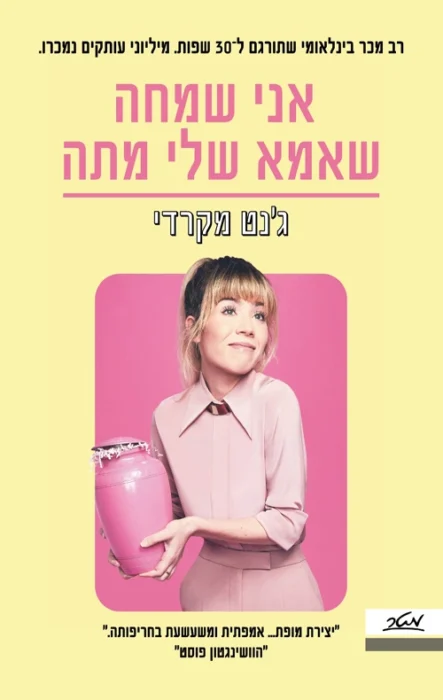
אני שמחה שאמא שלי מתה הוא ספר עם כותרת שנראית בהתחלה כמו פרובוקציה זולה. מהר מאוד מתברר שהכותרת היא הדבר הכי פחות מזעזע בספר. החיים שהובילו אליה מזעזעים הרבה יותר.
ג׳נט מקארדי, כוכבת ילדים לשעבר בניקלודיאון, כותבת ממואר על ילדות שנראתה כמו התגשמות החלום האמריקאי: סיפור הצלחה טלוויזיוני ואמא מסורה שמלווה את בתה לכל מקום. אבל זה היה חלום. זוועה. מאחורי התמונה הוורודה עמדה מערכת שליטה שלמה שהתחפשה לאהבה.
הספר נפתח ליד מיטת האם הגוססת. מקארדי משוכנעת שאמא שלה תצא מהתרדמת כשתשמע שהגיעה למשקל היעד שהציבה לה. זו פתיחה כמעט בלתי נתפסת: היא נערכת לבשורה, מבקשת מכולם לצאת מהחדר, ולא מעלה בדעתה אפשרות אחרת. אישה צעירה עומדת ליד אמה הגוססת ובטוחה שהדבר שיחזיר אותה לחיים הוא העובדה שהגיעה לארבעים קילו. מכאן הספר חוזר אחורה ומראה איך מגיעים לשם. פרק אחר פרק. פרט אחר פרט.
מה שצריך לדעת
ממואר של ג׳נט מקארדי, כוכבת ילדים לשעבר בניקלודיאון, על ילדות שנשלטה בידי אם שתלטנית, הפרעות אכילה, תעשיית הבידור והמאבק להפוך לאדם נפרד.
לקוראים שאוהבים ממוארים אישיים, כנים וחסרי רחמים, ולעוסקים ביחסי הורים וילדים, טראומה, בריאות הנפש והאופן שבו שליטה מתחפשת לאהבה.
השילוב הנדיר בין כאב, הומור ובהירות. מקארדי מצליחה לחשוף מנגנון של התעללות בלי להפוך את הספר למצעד של רחמים עצמיים.
ממואר מטלטל, מצחיק וכתוב נפלא. ספר על אם ובת, אבל גם על הזכות הבסיסית להיות אדם נפרד מהתפקיד שאחרים כתבו עבורך.
מקארדי מתארת ילדות שבה הגוף שלה לא שייך לה. השיער, האוכל, המשקל, הבכי, הקריירה, אפילו הפחד, כולם עוברים דרך האם. היא מנהלת הכול: מה תאכל, כמה תשקול, איך תיראה, מתי תעבוד, מתי תבכה, מתי תחייך, מתי תהיה ילדה טובה. והכול עטוף במילים יפות: דאגה, בריאות, קריירה, אהבה, הקרבה אימהית. ההתעללות לא מגיעה עם שלט מהבהב. היא מגיעה עם אמא שמקלחת אותך עד גיל שש-עשרה, קוראת לזה דאגה, ודואגת שתאכלי סלט עם רוטב עוף בצד. אפילו לא עוף.
היא אינה “אמא קשה”. היא אישה שהופכת את בתה לפרויקט חיים, ואחר כך דורשת ממנה גם להכיר תודה. הילדה לומדת מהר מאוד שכל קיומה תלוי בשאלה אם אמא מרוצה. כשאמא מרוצה, יש רגע של אוויר. כשאמא לא מרוצה, הגוף נכנס למתח. הילדה קוראת סימנים כמו מי שחיה באזור אסון. לפני שהשכל מבין, הגוף כבר יודע.
הטראומה בספר אינה רק זיכרון. היא חקוקה בגוף ובנפש. כשהיא מתארת איך למדה לבכות לפי סימן, הספר הופך לכתב אישום נגד תעשייה שלמה. הילדה מביאה לאודישן כאב אמיתי, והמבוגרים קוראים לזה כישרון. היא לומדת לבכות יפה מול מצלמה. איזה חלום הוליוודי נפלא: ילדה נשברת, והדמעות מצטלמות מצוין.
מקארדי כותבת מתוך זעם, כאב ובהירות מאוחרת, ולעיתים גם מצחיקה מאוד. היא זוכרת את הרצון להצליח, את הרגעים שבהם באמת רצתה שאמא תהיה גאה, את ההנאה הקטנה והמסוכנת שבתחושה שהיא טובה במשהו. זו אינה תמונה נקייה של ניצול מבחוץ וקורבן טהור מבפנים. הילדה לומדת להפיק ערך בדיוק מהמקומות שבהם היא נפגעת. הכאב שלה הופך לכישור. הגוף שלה הופך לנכס. הציות שלה הופך למקצוענות. היא נמחצת בתוך המערכת, אבל גם מנסה להצטיין בה, כי זו הדרך היחידה שהיא מכירה לקבל אהבה.
האב בספר נשאר דמות מורכבת ועצובה. יש בו מובסות וחולשה, אבל גם רגעים קטנים שבהם הוא נותן לג׳נט מרחב נשימה. לפעמים הוא מעורר רחמים. לפעמים כעס. רוב הזמן הוא פשוט שם, בפריפריה של התמונה.
כשהספר מתקדם וג׳נט מתבגרת, הזוועה מחליפה צורה. היא בורחת מאמה אל קשרים אחרים, וגם שם מתקשה להגדיר את הגבולות של עצמה. מי שגדלה בתוך בית שבו אהבה הגיעה תמיד עם אשמה, שליטה ובושה, לא יוצאת משם עם מצפן רגשי תקין ומדריך שימוש בכריכה קשה. היא ממשיכה להאמין שאם רק תהיה טובה מספיק, מסבירה מספיק, רזה מספיק, מבינה מספיק, אולי סוף־סוף יאהבו אותה.
הפרקים המאוחרים, אחרי מות האם, מסרבים לפנטזיית ההחלמה המיידית. אין כאן “ואז היא מתה והשתחררתי”. האם מתה, אבל הקול שלה נשאר. מקארדי צריכה ללמוד לחיות לא רק בלי אמה, אלא גם בלי התפקיד שאמה בנתה לה. זה תהליך מכוער, מביך, מצחיק, ולכן גם אמין כל כך.
הספר מצחיק. מקארדי כותבת מצוין, עם חוש הומור יבש, אכזרי ונקי. הסיפורים המאוחרים על סטיבן, למשל, נקראים כקומדיה שחורה: היא מצאה סוף־סוף את אהבת חייה, אבל מתברר שאהבת חייה היא גם האדם שחושב שהוא ישו ומחליט להתנזר ממין. עד שהיא סוף־סוף חווה סקס כמשהו טוב, כמעט חלומי, החיים, בנדיבותם הידועה, מצמידים לזה גבר שמודיע לה שמעתה אין יותר מזה. זה קורע, אבל לא קליל. ההומור בספר לא מרכך את הטראומה; הוא מונע ממנה להפוך למקדש של אומללות.
ג׳נט מקארדי לוקחת בעלות על הסיפור שלה, וזה אחד הדברים שגורמים לספר לעבוד כל כך טוב. היא לא מבקשת מאיתנו לעמוד בתור וללטף לה את הפצע. כל השנים השתמשו בכאב שלה; עכשיו היא הופכת אותו לספר, ובפעם הראשונה קובעת את התנאים. באודישן, אחרים ביקשו ממנה לבכות שוב. בספר, היא מחליטה מה לספר, איפה לחתוך, מתי לצחוק, ומתי להשאיר את הקורא מול המשפט בלי גלגל הצלה.
מבחינתי, הסיום האמיתי של הספר מגיע ברגע שבו הקריירה שלה במשחק מסתיימת בשיחת טלפון קצרה, והיא מבינה שאינה רוצה לחזור. אחרי חיים שלמים, היא אומרת סוף־סוף: לא עוד. החיים שלה יהיו בידיים שלה. לא בידיים של אמה. לא של סוכנים. לא של מלהקות. לא של הפרעת אכילה. בידיים שלה.
זה לא סוף מאושר במובן הזול. אין כאן ריפוי נוצץ, שקיעה, או משפט השראה שאפשר להדפיס על ספל. תודה לאל. אחרי ספר שלם שבו ג׳נט מקארדי הופקעה מעצמה, היא מחזירה לעצמה את הדבר הבסיסי ביותר: הזכות להיות אדם נפרד. ויש בזה תקווה לכל מי שלמדה לקרוא לשליטה אהבה.
כן. גם אני שמחה שאמא של ג׳נט מתה. אחרי הספר הזה, קשה מאוד להרגיש אחרת. הספר שלה חזק, מזעזע ומצחיק להפליא. הוא כתוב בחדות יוצאת דופן, בלי רחמים עצמיים עודפים ובלי התחנפות לקורא.
I'm Glad My Mom Died / Jennette McCurdy
I'm Glad My Mom Died begins with a title that initially looks like cheap provocation. It quickly becomes clear that the title is the least shocking thing about the book. The life that led to it is far more disturbing.
Jennette McCurdy, former Nickelodeon child star, writes a memoir about a childhood that looked like the American dream: television success and a devoted mother who accompanied her daughter everywhere. But it was a dream. A nightmare disguised as one. Behind the cheerful image stood an entire system of control masquerading as love.
The book opens beside her dying mother's hospital bed. McCurdy is convinced her mother will wake up from her coma when she hears that Jennette has reached the target weight she set for her. It is an almost unbelievable opening. She prepares herself for good news, asks everyone to leave the room, and never considers any other possibility. A young woman stands beside her dying mother, certain that the thing that will bring her back to life is the fact that she now weighs eighty-eight pounds. From there, the book moves backward and shows exactly how someone ends up in that place. Chapter by chapter. Detail by detail.
McCurdy describes a childhood in which her body did not belong to her. Her hair, food, weight, tears, career, even her fears all passed through her mother first. Her mother managed everything: what she would eat, how much she would weigh, how she would look, when she would work, when she would cry, when she would smile, when she would be a good girl. Everything came wrapped in beautiful words: concern, health, career, love, maternal sacrifice.
The abuse does not arrive carrying a flashing sign. It arrives with a mother who bathes you into your teenage years, calls it care, and makes sure you eat salad with chicken dressing on the side. Not even chicken.
She is not simply a “difficult mother.” She is a woman who turns her daughter into a life project and then demands gratitude for it. The child quickly learns that her entire existence depends on whether her mother is pleased. When her mother is happy, there is a moment of air. When she is not, the body enters a state of tension. The child learns to read warning signs the way someone living in a disaster zone would. Before the mind understands, the body already knows.
The trauma in this book is not merely remembered. It is written into the body and mind. When McCurdy describes learning how to cry on cue, the memoir becomes an indictment of an entire industry. A child brings real pain to an audition, and adults call it talent. She learns to cry beautifully on camera. What a wonderful Hollywood dream: a child breaks apart, and the tears look fantastic on screen.
McCurdy writes with anger, pain and belated clarity, but she is also often very funny. She remembers wanting to succeed, the moments when she genuinely wanted her mother to be proud of her, and the dangerous pleasure of feeling good at something. This is not a simple story of an external abuser and a pure victim. The child learns to extract value from the very places where she is being harmed. Her pain becomes a skill. Her body becomes an asset. Her obedience becomes professionalism.
She is crushed by the system, yet she tries to excel within it because it is the only way she knows to receive love.
The father remains a complicated and deeply sad figure. There is weakness and defeat in him, but also small moments in which he gives Jennette room to breathe. Sometimes he inspires sympathy. Sometimes anger. Most of the time he simply remains at the edge of the picture.
As the memoir progresses and Jennette grows older, the horror changes shape. She escapes her mother only to fall into other unhealthy relationships, still unable to define her own boundaries. Someone raised in a home where love always arrived wrapped in guilt, control and shame does not emerge with a functioning emotional compass and an instruction manual.
The later chapters, after her mother's death, refuse the fantasy of instant healing. There is no “and then she died and I was free.” Her mother dies, but her voice remains. McCurdy must learn how to live not only without her mother, but without the role her mother created for her. The process is ugly, embarrassing, funny and therefore deeply believable.
The book is genuinely funny. McCurdy writes brilliantly, with a dry, cruel and precise sense of humor. The stories about Steven, for example, read like black comedy. She finally finds the love of her life, only to discover that the love of her life believes he is Jesus and decides to become celibate. Just when she finally experiences sex as something joyful, life responds by attaching it to a man who announces there will be no more of it. It is hilarious, but never light. The humor does not soften the trauma. It prevents it from becoming a shrine to suffering.
Jennette McCurdy takes ownership of her story, and that is one of the reasons the memoir works so well. She does not ask us to line up and comfort her. For years other people used her pain. Now she turns it into a book and, for the first time, sets the terms herself. At auditions, other people asked her to cry again. In this memoir, she decides what to tell, where to cut, when to laugh, and when to leave the reader alone with a sentence.
For me, the true ending arrives when her acting career effectively ends with a short phone call and she realizes she does not want to go back. After an entire lifetime, she finally says: no more.
Her life will belong to her. Not to her mother. Not to agents. Not to casting directors. Not to an eating disorder. To her.
This is not a happy ending in the cheap sense. There is no glowing recovery, no sunset, no inspirational quote worthy of a coffee mug. Thank God. After an entire book in which Jennette McCurdy was dispossessed of herself, she reclaims the most basic thing of all: the right to exist as a separate person.
And there is hope in that for anyone who has ever learned to call control love.
Yes. I am glad Jennette McCurdy's mother died too. After reading this book, it is very difficult to feel otherwise. Her memoir is powerful, shocking and often laugh-out-loud funny. It is written with remarkable sharpness, without excessive self-pity and without ever flattering the reader.
לגלות עוד מהאתר Sivi's Books
Subscribe to get the latest posts sent to your email.