או: הרגע שבו המילים מאבדות את כוחן, והופכות לכלי משחק בידי השלטון
אם במערכה הראשונה ריצ'רד השלישי משתמש בשפה כדי להוליך שולל אחרים, במערכה השנייה השפה עצמה נעשית מוסד של הכחשה. השקר כבר איננו טריק של אדם אחד, אלא צורת הפעולה של החצר.
זו אמנם מערכה קצרה, אך מכוננת: משטרים אינם קורסים רק מכוח החרב, אלא גם כשהסמכות שבתוכם מתרוקנת. עם מות אדוארד לא מת רק המלך, אלא גם הסיפור שהעלה אותו אל הכתר: תביעת הזכות של בית יורק, זיכרון הדם שנשפך במלחמה, והנקמה בבית לנקסטר. כל עוד המלך חי, השלטון נשען על נרטיב של צדק היסטורי. מרגע שהוא מת, הנרטיב הזה קורס, והכתר נחשף כפי שהוא: לא עיקרון אלא שלל. לא דבר שמקבלים בזכות, אלא דבר שלוקחים בכוח. וכשהסמכות קורסת, גם הציבור חדל להתווכח על צדק, מפני שכבר אין מי שייתן לצדק תוקף.
טעות לחשוב שריצ'רד ממציא כאן את הרוע. הרוע כבר מבוצר בתוך מוסדות השלטון, בתוך לשון החצר, בתוך הפער שבין שבועה למעשה. ריצ'רד אינו יוצר את הקרקע הזאת. הוא מזהה עד כמה היא בשלה, ואז דוחף בדיוק אל המקומות שבהם הסדר כבר נחלש. הוואקום איננו רק מצב שהוא מנצל, אלא גם נשק שהוא מרחיב. זו מדינה שבה המילים איבדו את ערכן, והאמת, אם בכלל עוד אפשר לדבר עליה, נגבית במחיר דם.
סיכום קצר של המערכה
בארבע תמונות שייקספיר מראה איך הסדר הפוליטי מתפרק.
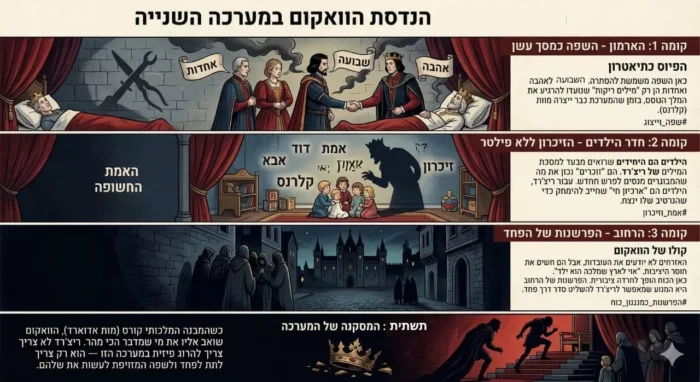
תמונה 1: אדוארד מנסה לייצר "אחווה" בדיעבד, וחרטה מוצגת כטקס היטהרות. המילים נשמעות יפות מדי, ולכן הן מלמדות את הקהל את הלקח הראשון של המערכה: בחצר הזאת השפה אינה מתקנת. היא רק מכסה.
תמונה 2: המלך מת, והחצר עוברת מיד מאבל לתככים ומאבקים. הילד היורש אינו נתפס עוד כעתיד הממלכה אלא כנכס פוליטי, וריצ'רד נכנס אל הרגע הזה כשהוא יודע שהשלטון איבד את היכולת להגן על עצמו.
תמונה 3: הרחוב מדבר. רגע קצר של פיכחון לפני השיגעון. האזרחים רואים את מה שהאצולה מסרבת לראות: שמלך-ילד איננו הבטחה לעתיד, אלא הזמנה למאבק בין עוצרים, סיעות ואצילים תאבי כוח.
תמונה 4: הקול הנשי הופך לקול מוסרי והיסטורי כאחד. הדוכסית איננה עוד דמות רקע, אלא סמל לאנגליה הפצועה עצמה: אם שאיבדה בעל ובנים למען הכתר, ומבינה שהמלוכה איננה פרס אלא קללה תורשתית. בשורה "אח נגד אח, דם נגד דם, אני נגד אני" שייקספיר מזקק דור שלם של מלחמות אזרחים. מלוכה שעוברת בירושה של דם מולידה עוד דם.
ניתוח תמטי: הארכיטקטורה של השקר הממוסד
שפה וייצוג: הפיוס כטקס ריק
תמונת הפיוס סביב מיטת אדוארד הגוסס היא אחת הסצנות הציניות במחזה. המלך אדוארד רוצה שהמילה תתקן; הוא מבקש מהנוכחים "לאהוב זה את זה" כאילו אפשר לאחות את פצעי מלחמת האזרחים באמצעות משפט יפה. ריצ'רד מסכים מיד. מהר מדי. חלק מדי. כשההיענות חלקה כל כך, ברור שאין כאן פיוס. ההודעה על מות קלרנס, שמגיעה רגע אחרי שבועות האהבה האלו, היא הפטיש שמרסק את המצג. זהו הרגע שבו מתרחש רצח של ערך ה"התנצלות". פתאום מתברר שהשיחה הקודמת לא הייתה פיוס אלא פארסה, והכלל הפוליטי החדש נחשף: למילים אין מחיר. את המחיר משלם הגוף.
אמת וזיכרון: הילדים כעדים מסוכנים
במערכה הזאת הילדים מתגלים כסיוט הגדול ביותר של השלטון, מפני שהם היחידים שעדיין אינם יודעים לשחק את המשחק. המבוגרים כבר חיים בתוך משא ומתן מתמיד עם המציאות: הם שוקלים מילים, מטשטשים משמעויות, מחליפים גרסאות כדי לשרוד. הילדים, לעומתם, פשוט חוזרים על מה ששמעו.
הרגע המבריק והמפחיד ביותר בסצנה מגיע כשהדוכס הצעיר מיורק חוזר בתמימות על לעגו של דודו ריצ'רד, שאמר עליו: "עשב שוטה גדל כמו אש". זהו רגע קטן, אבל הוא מפחיד יותר מכל נאום. פתאום מתברר שאי אפשר לשלוט באמת כל עוד היא חיה בזיכרונם של מי שעדיין לא למדו לפחד. האמת כבר איננה תלויה במה שהמבוגרים מוכנים לומר, אלא במה שהילדים זוכרים. הקהל מבין שבתוך בית יורק הרעל אינו זורם רק במסדרונות הפוליטיים, אלא גם בשיחות המשפחתיות עצמן.
כאן שייקספיר מנסח תובנה אפלה: מי שרוצה לשלוט בנרטיב, לא די לו לנצח את אויביו. הוא צריך למחוק את העדים. הילדים אינם רק יורשים לכתר, הם ראיות חיות.
הפרשנות כמנגנון כוח: תעמולה כתחושת בטן
תמונת האזרחים ברחוב איננה ייצוג רומנטי של "קול העם", אלא מהלך דרמטי מחושב המשרת את התעמולה הטיודורית. שייקספיר צריך שהקהל יבין שהסדר הישן חולה, אך אם יאמר זאת ישירות, הדבר יישמע כתעמולה גסה. לכן הוא מפקיד את האבחנה הפוליטית בידי אנשים "פשוטים", שמריחים את צחנת הריקבון עוד לפני שהחצר מוכנה להודות בה. כשהאזרחים אומרים "אוי לארץ שמלכה הוא ילד", הם אינם רק מביעים פחד, אלא מציגים אותו כאמת מובנת מאליה. כך המצב הפוליטי חדל להיראות כשאלה של פרשנות, ומתחיל להישמע כמו עובדה כמעט טבעית. זה כוחה הגדול של תעמולה: היא נשמעת כמו אינסטינקט.
אנגליה כגוף פצוע: הקול הנשי והמקלט
המערכה השנייה משרטטת את אנגליה כגוף נשי הנושא על עצמו את מחיר הפוליטיקה הגברית. אליזבת, המלכה הנרדפת, מבינה שאין עוד סדר שמסוגל להגן עליה. כשהיא בורחת עם ילדיה אל המקלט, הסצנה חושפת רגע קיצוני של קריסת אמון: גם הקדושה עצמה חדלה להיות מקור סמכות, ונעשית מקום מחסה אחרון. בעולמו של ריצ'רד, המקלט אינו רק מקום מסתור, אלא השריד האחרון של חוק שאינו נשען על חרב. דווקא משום כך הוא חשוב כל כך: הוא הקו האדום האחרון שהפוליטיקה עוד לא מחקה, והקורא מבין שכבר לא יעמוד לאורך זמן.
ציר העומק: אין אמת בלי חסות
לקראת סוף המערכה השנייה מתברר הכלל האכזרי שלה: אמת שאינה נשענת על כוח, נמחקת. כשמלך מת והקול המחייב נעלם, המציאות עצמה נעשית שדה מאבק בין גרסאות. מי שינצח בו איננו הצודק, אלא החזק. בתוך הוואקום הזה האזרחים מדברים מתוך פחד, הנשים מתוך אבל, והגברים מסתירים את חולשתם בשבועות חלולות. ריצ'רד כבר אינו צריך להמציא דבר. השקרים כבר כאן. הוא רק צריך לבחור באיזה מהם להשתמש. אם במערכה הראשונה הוא למד לשלוט בשפה, במערכה השנייה השפה כבר עובדת בשירותו. ומה יכול לעצור אדם כזה, כשהוא מחליט להפוך את הבמה למדינה?

Engineering the Vacuum: Act II of Richard III
Or: the moment words lose their force and become tools in the hands of power.
If, in Act I, Richard still had to work on two fronts to construct himself, in Act II, he already operates within a reality that suits his needs. No longer merely a matter of personal effort, but of an entire system that internalizes his rules of the game. Richard is still in motion, but now power itself is moving with him.
This is a short act, but decisive. Regimes do not collapse by the sword alone, but also when the authority within them begins to empty. With Edward’s death, not only does the king die, but so does the story that raised him to the crown: the Yorkist claim of right, the memory of blood spilled in war, and revenge against Lancaster. As long as the king lives, rule can still rest on a narrative of historical justice. The moment he dies, that narrative collapses, and the crown is exposed for what it is: not a principle, but spoils. Not something granted by right, but something seized by force. And when authority collapses, the public, too, stops arguing about justice, because there is no longer anyone left to give justice binding force.
It is a mistake to think that Richard invents evil here. Evil is already entrenched in the institutions of power, in the language of the court, in the gap between oath and action. Richard does not create this ground. He sees how ripe it is, then pushes precisely where the order has already begun to weaken. The vacuum is not merely a condition he exploits. It is also a weapon he expands. This is a state in which words have lost their value, and truth, if one can still speak of such a thing at all, is exacted in blood.
A summary of the act
Across four scenes, Shakespeare shows how the political order comes apart.
Scene 1: Edward tries to manufacture “brotherhood” after the fact, and remorse is staged as a ritual of purification. The words sound too beautiful, and that is precisely the point. They teach the audience the act’s first lesson: in this court, language does not repair. It only covers.
Scene 2: The king dies, and the court moves at once from mourning to intrigue and struggle. The child heir is no longer seen as the kingdom’s future, but as a political asset, and Richard enters this moment knowing that the regime has lost the ability to protect itself.
Scene 3: The street speaks—a brief moment of lucidity before the madness. The citizens see what the nobility refuses to see: that a child king is not a promise of the future, but an invitation to conflict among protectors, factions, and power-hungry nobles.
Scene 4: The female voice becomes at once a moral and a historical voice. The Duchess is no longer a background figure but a symbol of wounded England itself: a mother who has lost her husband and sons for the crown and who understands that monarchy is not a prize but a hereditary curse. In the line “brother against brother, blood against blood, self against self,” Shakespeare distills an entire generation of civil wars. A monarchy passed down through blood gives rise to more blood.
Thematic analysis: the architecture of institutionalized falsehood
Language and representation: reconciliation as an empty ritual
The reconciliation scene around the bed of the dying Edward is one of the most cynical scenes in the play. King Edward wants words to repair. He asks those around him to “love one another,” as though a beautiful sentence could mend the wounds of civil war. Richard agrees immediately. Too quickly. Too smoothly. When the response is that smooth, it is clear that there is no reconciliation here. The announcement of Clarence’s death, arriving only moments after these vows of affection, is the hammer that shatters the display. This is the moment in which the very value of “apology” is murdered. Suddenly, it becomes clear that the previous exchange was not reconciliation but farce, and a new political rule is exposed: words cost nothing. The body pays the price.
Truth and memory: the children as dangerous witnesses
In this act, the children emerge as the regime’s greatest nightmare, because they are the only ones who still do not know how to play the game. The adults already live in a constant negotiation with reality: they weigh words, blur meanings, and alter versions to survive. The children, by contrast, repeat what they have heard.
The scene’s most brilliant and disturbing moment comes when the young Duke of York innocently repeats his uncle Richard’s mockery of him: “Small herbs have grace; great weeds do grow apace.” It is a small moment, but more frightening than any speech. Suddenly, it becomes clear that truth cannot be controlled as long as it lives in the memory of those who have not yet learned to fear. Truth no longer depends on what the adults are willing to say, but on what the children remember. The audience understands that within the House of York, poison runs not only through political corridors, but through family conversation itself.
Here, Shakespeare formulates a dark insight: anyone who wants to control the narrative cannot merely defeat his enemies. He must erase the witnesses. The children are not merely heirs to the crown. They are living evidence.
Interpretation as a mechanism of power: propaganda as gut feeling
The citizens’ scene in the street is not a romantic representation of “the voice of the people,” but a calculated dramatic move serving Tudor propaganda. Shakespeare needs the audience to understand that the old order is diseased, yet if he were to state this directly, it would sound like crude propaganda. So he places the political diagnosis in the mouths of “ordinary” people who smell corruption before the court is ready to admit it. When the citizens say, “Woe to that land that’s governed by a child,” they are not merely expressing fear. They present that fear as something self-evident. In this way, the political situation ceases to appear as a matter of interpretation and begins to sound like an almost natural fact. That is the great power of propaganda: it sounds like instinct.
England as a wounded body: the female voice and sanctuary
Act II draws England as a female body bearing the cost of male politics. Elizabeth, the hunted queen, understands that no order left is capable of protecting her. When she flees with her children into sanctuary, the scene reveals an extreme moment of collapsed trust: even holiness itself ceases to function as a source of authority and becomes a final refuge. In Richard’s world, sanctuary is not merely a hiding place, but the last remnant of a law that does not rest on the sword. That is precisely why it matters so much: it is the last red line politics has not yet erased, and the reader understands that it will not stand much longer.
The deeper axis: there is no truth without protection
By the end of Act II, its cruel rule becomes clear: truth unsupported by power is erased. When a king dies, and the binding voice disappears, reality itself becomes a battleground between competing versions. The one who wins is not the right one, but the stronger one. Inside this vacuum, the citizens speak out of fear, the women out of grief, and the men hide their weakness behind hollow oaths. Richard no longer needs to invent anything. The lies are already here. He only has to choose which one to use. If in Act I he learned how to control language, in Act II, language is already working in his service. And what can stop such a man when he decides to turn the stage into the state?
לגלות עוד מהאתר Sivi's Books
Subscribe to get the latest posts sent to your email.