
Please scroll down for an English review.
הכוח של Years That Changed History: 1215 טמון בכך שהוא לא באמת ספר על שנה אחת, אלא על עולם שלם שמגיע לנקודת רתיחה. דורסי אמסטרונג לוקחת את 1215 והופכת אותה לחתך רוחב של לחץ היסטורי: צפיפות, מחסור, שינויי אקלים, מוסדות מתקשים, וסדרים חדשים שנולדים מתוך משבר.
המאות ה־11 וה־12 יצרו יצרו עולם צפוף יותר, עשיר יותר ומתוח יותר. האוכלוסייה גדלה, הכלכלה התרחבה, והמשאבי נעשו יקרים ולחוצים יותר. בתוך המציאות הזאת גם המוסדות נעשו נוקשים, מסודרים ותובעניים יותר. זהו הרקע שממנו נולדים המגנא כרטא, הוועידה הלטרנית והחברה הרודפת. 1215 איננה התחלה; היא הרגע שבו תהליכים ארוכים מתכנסים לצורה גלויה ומאיימת.
אירופה הלטינית היא המקום שבו הסדר הסמכותי החדש מקבל צורה חדה במיוחד. המגנא כרטא מעניינת כאן פחות בגלל ההילה החוקתית שהודבקה לה בדיעבד, ויותר מפני שהיא חושפת שליט שנכשל צבאית ומנסה לכסות על כשלונותיו דרך גבייה, סחיטה ושלטון שרירותי. חשיבותה נעוצה בכך שגם בתוך אליטה פיאודלית מגיע רגע שבו מישהו אומר למלך: לא עוד בלי גבול. אבל בזמן אמת לא היה כאן רגע נשגב של חירות; היה מסמך אינטרסנטי ושברירי שהחזיק מעמד עשרה שבועות בלבד.
הוועידה הלטרנית הרביעית היא המרכז האמיתי של הספר הזה. אם המגנא כרטא מראה איך מגבילים מלך כושל, Lateran IV מראה איך הכנסייה הלטינית מנסה לכתוב קוד הפעלה לציוויליזציה שלמה. זה לא עוד דיון תיאולוגי, אלא מנגנון של דוקטרינה, משמעת, שליטה והסדרה. היא מטמיעה את הכנסייה בתוך חיי היומיום, הופכת את הנישואין לסקרמנט, ומסמנת את מי שאינו נוצרי. כאן אמסטרונג מבהירה שהרדיפה איננה סטייה של העולם הנוצרי, אלא חלק מן הדרך שבה הוא מייצר סדר. השינוי שהיא מתארת עמוק כל כך, עד שקשה לדמיין היום את הכנסייה הקתולית שלפני 1215.
כאן נכנס גם אחד המושגים החשובים ביותר בספר, "החברה הרודפת" של ר. י. מור. אמסטרונג משתמשת בו היטב כדי להראות שלא היה דבר מהותי משותף ליהודים, כופרים, מצורעים וקבוצות אחרות שסומנו כבעיה. המשותף לא היה מצדן, אלא מצד הרודפים. הרדיפה לא צמחה מתוך תכונה של הקורבנות, אלא מתוך חברה שלמדה לייצר לעצמה "אחרים" באופן שיטתי.
הפרקים על היהודים הם מן המקומות החזקים ביותר בספר. אמסטרונג מראה שהאנטישמיות הימי־ביניימית איננה רק שנאה דתית מופשטת, אלא מערכת אינטרסים קרה ויעילה. זהו פס ייצור של שנאה: סימון כחריג, דחיקה לשוליים, יצירת תלות, ולבסוף אשמה בתפקיד שנכפה עליו. זו אינה סטייה של ההיסטוריה, אלא אחד המנגנונים הוותיקים והמלוכלכים ביותר שלה.
היהודים לא תמיד היו גוף זר. במאות המוקדמות הם עבדו במגוון מקצועות וחיו בקהילות מעורבות. ארמסטרונג שוברת את אשליית הבידוד הקבוע ומשרטטת סיפור של הידרדרות: המעבר של היהודי מ"טעות הכרחית" ל"בעיה מיותרת".
הצביעות המערכתית נחשפת בשיאה: היהודים לא זוהו עם כסף בשל יצר מסתורי, אלא מפני שהנצרות אסרה על עצמה ריבית ועדיין נזקקה לאשראי. הפתרון היה פשוט: לתת ליהודים להיות ה"גוי של שבת" של הכלכלה האירופית. ואז, כדרכה של אירופה, גם להשתמש בהם וגם לתעב אותם על כך. היהודי נעשה חיוני ומטונף, נחוץ ושנוא. ככל שהוא יעיל יותר, כך הטינה והקנאה בו מעמיקות.
במסעי הצלב, הסיפור מקבל צורה רצחנית ישירה. ארמסטרונג מתמקדת בשאלה השטנית של התקופה: למה לצאת ללבנט כדי להרוג כופרים, אם יש יהודים ממש כאן? היהודי זמין, מיידי וזול. הוא מספיק קרוב כדי להרוג, ומספיק שונה כדי להצדיק את הטבח. מסע הצלב הופך לטכניקה של טיהור פנימי.
הסצנה במיינץ, של יהודים ההורגים את בני משפחתם ואת עצמם כדי לא ליפול להמרה כפויה, היא כמעט בלתי נסבלת. ארמסטרונג לא הופכת אותה למיתוס הירואי, אלא לעדות על אלימות נוצרית שהפכה את עצם החיים לבלתי אפשריים. ביורק, ב -1190, נופלת לחלוטין העמדת הפנים הדתית: ההמון שוחט יהודים בשם האמונה, ומיד אחר כך שורף את רישומי החובות. הדת סיפקה את התירוץ; הכסף סיפק את התשוקה.
לצד הדיכוי, ההרצאות פורשות גם אפשרויות אחרות של ארגון וכוח. פרנציסקוס מאסיזי מייצג חלופה אמיתית: מול כנסייה עשירה, בירוקרטית ורודפת, הוא מציע דת שיורדת אל הרחוב, אל העוני ואל הגוף. הוא חשוב כאן לא כקדוש חביב, אלא כהוכחה שאותו עולם קתולי עצמו ידע גם לייצר תגובה נגדית לעצמו, דת של קירבה, פשטות ושירות. לא מהפכה פוליטית, אבל בהחלט סירוב עקרוני להפוך את הקדושה למנגנון של כוח.
מן העבר השני של העולם עולה ג'ינגיס חאן. אמסטרונג מסרבת להשאיר את הקורא כלוא בתוך המבט האירופוצנטרי, ומציגה את המונגולים לא ככוח הרס ברברי, אלא כאינטליגנציה פוליטית של ארגון. ג'ינגיס חאן מאחד שבטים, מנצל טכנולוגיה, ומייצר סדר עולמי אחר: זריז, נייד, ואינו זקוק לאותו ציפוי תיאולוגי שבו אירופה הלבישה את האלימות שלה.
זו סדרת הרצאות מבריקה דווקא מפני שהיא לא מתחנפת לשום מיתוס. היא לא רומנטית כלפי אירופה, לא עושה מן המגנא כרטא דמוקרטיה תמימה, ולא מציירת את ג'ינגיס חאן כברברי נוח לעיכול. אמסטרונג בוחנת את 1215 דרך השאלה היחידה שבאמת חשובה: איך בני אדם מייצרים סדר, ועל חשבון מי.
Years That Changed History: 1215 / Dorsey Armstrong
Audible Edition, 13H, 2019
דירוג SIVI –
איכות אודיו –
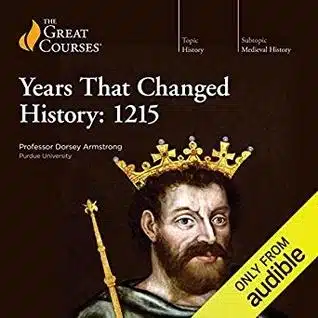
The power of Years That Changed History: 1215 lies in the fact that it is not really about a single year, but about an entire world reaching a boiling point. Dorsey Armstrong takes 1215 and turns it into a cross-section of historical pressure: overcrowding, scarcity, climate shifts, institutions under strain, and new forms of order being born out of crisis.
The eleventh and twelfth centuries created a world that was denser, richer, and more tense. The population grew, the economy expanded, and resources became more expensive and more strained. Within that reality, institutions also became more rigid, more organized, and more demanding. This is the background out of which Magna Carta, the Fourth Lateran Council, and the persecuting society emerged. 1215 is not a beginning. It is the moment when long processes converge into a visible and threatening form.
Latin Christendom is where this new authoritarian order takes on a particularly sharp form. Magna Carta matters here less because of the constitutional halo it has acquired in retrospect, and more because it reveals a ruler who has failed militarily and seeks to cover his failures through extraction, coercion, and arbitrary power. Its importance lies in the fact that even within a feudal elite, there comes a moment when someone says to the king: not without limits anymore. But in real time, this was not a lofty moment of liberty. It was a narrow, self-interested, fragile document that lasted only ten weeks.
The Fourth Lateran Council is the true center of this course. If Magna Carta shows how a failing king can be restrained, Lateran IV shows how the Latin Church tries to write an operating code for an entire civilization. This is not just a theological discussion, but a mechanism of doctrine, discipline, control, and regulation. It embeds the Church in daily life, turns marriage into a sacrament, and marks out those who are not Christian. Here Armstrong makes clear that persecution is not a deviation of the Christian world, but part of the way it produces order. The transformation she describes is so deep that it is difficult today to imagine the Catholic Church before 1215.
This text introduces one of the most important concepts of the course: R. I. Moore’s idea of a “persecuting society.” Armstrong effectively illustrates that there was no intrinsic link between Jews, heretics, lepers, and other groups marked as problematic. Their shared experience of persecution did not originate from any defining trait of the victims, but rather from the actions of the persecutors. Persecution arose from a society that systematically learned to create “others.”
The lectures on the Jewish experience are among the strongest components of the course. Armstrong demonstrates that medieval antisemitism was not merely an abstract form of religious hatred; rather, it was a calculated and effective system of interests. Initially, a group is marked as different, then pushed to the margins of society, and made economically beneficial in that marginalized position. Ultimately, this group is blamed for the very role into which it was forced. This pattern is not an anomaly in history, but rather one of its oldest and most insidious mechanisms.
Historically, Jews were not always seen as a completely foreign group. In earlier centuries, they engaged in a diverse array of professions and lived in more integrated communities. Armstrong challenges the notion that segregation was a permanent state. Instead, the narrative reveals a decline: the shift of Jews from being perceived as a “necessary error” to being viewed as an “unnecessary problem.”
The systemic hypocrisy is clearly revealed here. Jews were not linked to money due to some inherent tendency, but because Christianity prohibited its followers from practicing usury while still requiring loans. The solution was straightforward: let the Jews handle the financial transactions. Subsequently, in a typical European manner, they were both utilized and despised for fulfilling that role.
In the context of the Crusades, the narrative takes on a starkly violent form. Armstrong highlights the disturbing question posed by the Crusaders: why travel to the Levant to kill infidels when there are Jews nearby? The Jew is accessible, immediate, and a convenient target. They are close enough to harm and different enough to rationalize violence against them. This marks the moment when the crusade transforms from a distant conflict into a method of internal purification.
The scene in Mainz, of Jews killing their own family members and themselves in order not to fall into forced conversion, is nearly unbearable. Armstrong does not turn it into a heroic myth, but into evidence of Christian violence that made life itself impossible. In York, in 1190, the religious pretense collapses completely: the mob slaughters Jews in the name of faith, and immediately afterward burns the debt records. Religion supplied the excuse. Money supplied the desire.
At the same time, the lectures also explore other possibilities of order and power. Francis of Assisi represents a genuine alternative. In contrast to a Church that is wealthy, bureaucratic, and persecuting, he offers a religion that engages with the streets, embraces poverty, and honors the physical body. His significance lies not in being a charming saint but in demonstrating that the Catholic world was capable of generating a reaction against itself—a religion characterized by closeness, simplicity, and service. While it is not a political revolution, it certainly represents a principled refusal to turn holiness into a mechanism of power.
On the other side of the world, Genghis Khan rises. Armstrong refuses to keep the listener trapped within a Eurocentric lens and presents the Mongols not as barbaric destroyers but as a political and organizational intelligence. Genghis Khan unites tribes, exploits technology, and produces another kind of world order, fast, mobile, and in no need of the theological coating with which Europe dressed its own violence.
This lecture series is brilliant precisely because it flatters no myth. It is not romantic about Europe, does not turn Magna Carta into an innocent democracy, and does not paint Genghis Khan as a conveniently digestible barbarian. Armstrong examines 1215 through the only question that really matters: how do human beings produce order, and at whose expense.
לגלות עוד מהאתר Sivi's Books
Subscribe to get the latest posts sent to your email.