
בסוף השבוע הקשבתי למקבץ אקלקטי של הרצאות של קורנל ווסט (Cornel West) שקיבץ ג'פרי ג'וליאנו. אודיובל, הממזרים נתנו לי פריוויו של המקבץ ואני הוקסמתי מהרטוריקה, הכריזמה והעוצמה של הדובר כך שמיהרתי לרכוש את המקבץ. ממש נסחפתי אחריו.
ווסט מדבר על צדק חברתי, אחריות של הפרט כלפי הקהילה, על הנשר והטווס ואת הכל הוא עושה תוך שהוא מגייס לטובת הטיעונים שלו 400 שנות דיכוי ועוולות נגד השחורים (סליחה לא בא לי להיות פוליטיקלי קורקט ולקרוא להם אפרו אמריקאים זה גם חוטא למהלך של ווסט) ומגוון טכניקות רטוריות מרשימות: קצב, טון, אינטימיות עם המאזינים.
ככל שהתקדמתי בהאזנה, הקסם התפוגג. התפכחתי כשפירקתי את הטיעונים שלו. הם עיצבנו אותי, קוממו אותי ולבסוף כשהוא התבטא על הסכסוך הישראלי פלסטיני, הבעירו את חמתי. ווסט הוא מה שאני קוראת שמאל פרוגרסיבי רדיקלי. הוא יושב על ענף של אהבה, צדק ויושרה, ומנסר אותו בעצמו בכל פעם שהוא מגיע למזרח התיכון. אני רק אשמח להחזיק לו את המסור.
רק האהבה תנצח?
"I am who I am because somebody loved me."
"So all this talk about being self-made … it's a lie."
נקודת המוצא של ווסט היא האהבה שהוא קיבל ממשפחתו והקהילה השחורה. ווסט הוא בן למשפחת שחורים שהצליחה לממש את החלום האמריקאי. אמו הייתה מורה ומנהלת בית ספר, אחיו סיים את ברקלי, ווסט עצמו זכה לחינוך מצוין ולמד באוניברסיטאות היוקרתיות ביותר של ה- Ivy League, הרווארד ופרינסטון ואחר כך גם לימד בהן ובייל.
האהבה שלאורה הוא צמח ועף כנשר, דחפה אותו להישגים, ציונים והשכלה. כשהגיע להרווארד אביו אמר לו-
"all I ask of you is that you do your best in your grades. But you never forget to be a certain kind of person, a certain kind of human being who never sells your soul for a mess of pottage."
מאוחר יותר נחזור לדימוי הנשר של ווסט. עכשיו רק אציין שההישגים והיושרה, שהאהבה הזו העמידה זה לצד זה בלי סתירה ביניהם, ייפרדו אצלו.
היושרה תתרחב לתביעה מוסרית כמעט אובססיבית כלפי הקהילה השחורה, ובעיקר כלפי מנהיגיה וכלפי השחורים שהצליחו: לממש סולידריות חברתית ולפעול למען האוכלוסייה השחורה המוחלשת. זו תביעה המבוססת על חובו של הפרט המצליח כלפי הקהילה שגידלה אותו, גם במחיר אישי.
ההישגים, לעומת זאת, יקבלו מעמד מפוקפק. הציונים, התארים והקריירה, שהאב ביקש מבנו להצטיין בהם, יהפכו אצל ווסט לפיתוי שצריך לחשוד בו, לטווס שמתהדר בנוצותיו.
באופן נפרד לגמרי, האהבה אצל ווסט מגדלת ראש נוסף כמו ההידרה: אהוב את אויבך. לא בגלל איזה שהוא חוב, כי מן הסתם האויב לא גידל אותו ולא אהב אותו. אלא משום שכל אדם נברא בצלם. ווסט שולל את הדבר הטבעי ביותר לאדם שנפגע: מושג האהבה שלו שולל מכל וכל שנאה ונקמה. אבל הוא מסוגל להכיל גם את יואי ניוטון, שעקב אחרי שוטרים כשהוא חמוש, ולראות בו מי ש"פשוט אוהב אתכם".
הנשר והטווס
אחד הדימויים הרטוריים המרשימים והחזקים ביותר של ווסט הוא דימוי הטווס והנשר. הטווס, לדבריו, מתהדר ומשוויץ: "Look at me, look at me, look at me". ולמה? "Peacocks strut because they can’t fly" (טווסים דווקא עפים, אבל לא נהיה קטנוניים). מולו הוא מציב את הנשר: "Be an eagle the way the Reverend C.L. Franklin preached. The eagle stirs his nest".
מקור הדימוי בדרשה המפורסמת של הכומר סי. אל. פרנקלין, אביה של אריתה פרנקלין, על הפסוק בדברים ל"ב, י"א: "כנשר יעיר קנו, על גוזליו ירחף". הנשר מעיר את הקן כדי שהגוזלים יעזבו אותו וילמדו לעוף לבד.
הטווס מייצג הצלחה שמבקשת נראות ואהבה. הנשר עף כי אהבו אותו. הוא מייצג עצמאות, יושרה וגדולה מוסרית. ווסט מבקש מהמאזינים להיות נשרים ולא טווסים.
אבל בזמן שהמאזינים נהנים לזהות את עצמם בנשר המוצלח והמוסרי, ווסט הופך עליהם את הקערה. מתברר שהנשר אצלו לא נמדד בתעופה, אלא בנאמנות: "be true to those who shaped you". מי שהתאהב בדמות שלו כנשר, גילה שהוא בדיוק מי שנשלח בחזרה לקן. נשר שעף רחוק ולא חוזר הוא בעיני ווסט sellout, מי שמכר את בכורתו בנזיד עדשים, ויורד לדרגת טווס. ולכן ווסט דורש מהנשר, גם בשיא הצלחתו, לעשות סיבוב פרסה, לחשב מסלולו מחדש, לזכור 400 שנות עוולות ולחזור לקן כדי לשאת על גבו את בני הקהילה שלא הצליחו לפרוש כנפיים ולעוף.
רק שווסט לא ממשיך עד סוף הפסוק: "יפרש כנפיו, יקחהו, ישאהו על אברתו". כן, הנשר הגדול נושא על גבו את הגוזלים שלו במטרה ללמד אותם לעוף. כל נשר נושא את גוזליו, וכשהגוזלים יגדלו, הם יישאו את שלהם.
ווסט הופך את סדרי בראשית: הוא דורש מהגוזל שלמד לעוף לחזור ולשאת את הקן כולו.
ויש כאן אירוניה כפולה. ווסט מקונן על המעבר מתודעת ה'אנחנו' לתודעת ה'אני', ועל התרופפות הסולידריות בקהילה השחורה. ובאותה נשימה הוא בוחר כסמל לסולידריות דווקא את הנשר: עוף שלא חי בלהקה, שהקן שלו הוא רק תחנת מעבר, ושכל ההורות שלו נועדה לכך שהגוזל יעזוב ויעוף לבד.
ואם ווסט שאב את הנשר מהדרשה של פרנקלין, לאוזן אמריקאית הנשר הוא קודם כול הסמל הלאומי של ארצות הברית, סמל החירות והעצמאות שלה. ווסט, שמבקר את אמריקה בחריפות כמעט בכל משפט, בחר דווקא בסמל הזה, וכבל אותו לקן
משא הגבר השחור
בהרצאה שנשא במכון California Institute of Integral Studies בסן פרנסיסקו, ככל הנראה באביב 2015, ווסט טוען: “To be successful is to be a copy, rather than an origin." זוהי טענה מוזרה מפיו של מי שהסיפור שלו מרובד בהצלחה ותהילה.
כדי להבין את מלוא המשמעות של הטיעון של ווסט, צריך לחזור צעד אחורה. העולם שעליו ווסט מדבר מלא בעוולות ובקטסטרופות כנגד הקהילה השחורה. ככל שזה תלוי בו, הן נמשכות כבר 400 שנים, ואחת הדרכים שעומדות בפני השחורים היא להתעטף בשריון, לגייס את האומץ ולשיר.
לא רק מטאפורית, באמת לשיר. הבלוז והג'אז הם המתת של השחורים לעולם. ובמובן זה הקול משמש אצלו במשמעות כפולה: קול שירה וקול פוליטי.
אין בלוז בלי קול משלך. ולכן, כשווסט מסתכל על אמריקה של היום ורואה "יותר הדים מקולות", הוא מסיק שלהצליח זה להיות העתק.
ואז הוא רואה מול עיניו את "האחות ביונסה". הבדרנית הגדולה בדורה, הוא אומר, עם "a lot of energy and talent". אבל, הוא מוסיף, "you ain’t Aretha. You know that". ומיד מבהיר: "that’s not a put down, that’s a description". ועל מה פרופסור ווסט מסתכל??!! על התחת שלה (סליחה, לא רק. על כל התנועות של הגוף שלה):
"Because she’s part of a culture of superficial spectacle. She got to look a certain way. She got to seem a certain way. She got to appear a certain way. And given the highly sexualized character of predatory capitalist culture, she got to shake a thing in a certain way."
בהרצאה על משא הגבר השחור, הוא בוחר להתייחס לאמנית השחורה המצליחה ביותר של הדור, זו ששולטת ביצירה שלה ובקול העצמאי שלה, ובמובן הבסיסי ביותר מממשת את הקריאה של ווסט עצמו. והיא זוכה לכינוי העתק, ולרצף תיאורים של גופה, של התנועות שלה ושל המראה שלה. ושום מילה ארורה על הקול שלה, כלומר על מה שווסט עצמו הגדיר כעיקר.
ומה יש לאריתה שאין לביונסה? לדבריו, אריתה רק אוחזת במיקרופון ושרה מהנשמה, ו"מהדהדת" את סם קוק ואת ה־Soul Stirrers. רגע, מהדהדת? לפני דקה הוא התלונן שיש באמריקה יותר מדי הדים. מסתבר שהד מותר, כל עוד הוא הד למסורת הנכונה. ווסט לא מודד מקוריות. הוא מודד נאמנות, בדיוק כמו אצל הנשר.
ביונסה כנראה לא סבלה מספיק לטעמו של ווסט כדי שקולה ייחשב. רק שנה אחר כך היא הוציאה את Lemonade, אלבום על בגידה, כאב והיסטוריה של נשים שחורות, ששזור בו קולו של מלקולם אקס. בלוז, בדיוק לפי ההגדרה של ווסט.
ומה עם סתם אדם הגון?
במהלך ההאזנה, אחת מעמדותיו של ווסט גרמה לי לחוסר נוחות הולך וגובר: "Success is one thing. Freedom is something else". ההצלחה של הפרט, לדבריו, אינה שקולה לחירות. חירות אמיתית היא להשתחרר מהצורך באישור, במעמד ובכסף, ולהישאר נאמן לקהילה שגידלה אותך, גם במחיר אישי.
ואותו מסכן אומלל, שעמל כל כך קשה להשיג את החלום האמריקאי ולא מכר את נשמתו לאף אחד? אצל ווסט אין לו שם. יש נשר שחזר לקן, ויש sellout שמכר את בכורתו בנזיד עדשים. למי שעומד באמצע נשאר, בלית ברירה, רק מקום אחד: ליד הטווס.
ומה כל חטאו של הטווס, ועל מה יצא קיצפו של ווסט? על כך שהוא פורש את נוצותיו ומבקש הכרה בהישגיו.
הדרישה שלו מאוד ספציפית. למרות שלכאורה החובה המוסרית שהוא משית חלה על שחורים ולבנים כאחד, הוא דורש באופן דווקני מהמעמד הבינוני השחור לא להסתפק בהצלחה אישית ולממש את חובו ההיסטורי לקהילה.
מה שמדהים אותי הוא שבאותה הרצאה, כשהוא תוקף את אובמה, ווסט עצמו אומר שרוב בני המעמד הבינוני השחור הם מעמד בינוני רק בשם: "If they missed two checks, they broke too". מספיק ששתי משכורות לא ייכנסו, והם מרוששים. אז ממי בדיוק הוא דורש לשאת את הקן? ממי שבעצמם על סף נפילה ממנו?
הפער בין התקף הזעם שלו על אובמה (שאפשר לזעום עליו, אני לא נגד, ויש הרבה על מה) לבין עוצמת החבות המוסרית שהוא מטיל על אותו מעמד בינוני פריך, חושף דיסוננס בלתי פתיר בגישה של ווסט.
אז מה עם סתם אדם הגון? מבחינתי, אדם הגון דואג קודם לעצמו, לביתו ולדור הבא. הוא עובד, משלם מסים, נוהג בהגינות באחרים, ומרים את קולו כשהוא רואה עוול. זו לא אדישות, וזו לא בגידה. ואת האחריות לתקן עוולות חברתיות לא אמור לשאת פרט שבקושי טיפס מעלה. בשביל זה יש מדינה.
ואדם הגון, קודם כול, מגן על ביתו. גם מפני מי שבא להרוג אותו.
על הסכסוך: מדוע ההידרה של האהבה מפסיקה לצמוח כשמגיעים לישראל?
לא אחת ווסט עוסק במה שהרבה ידוענים אוהבים לעסוק בו: הסכסוך הישראלי־פלסטיני. במושג ידוענים אני לא מתייחסת למשפיעני רשת למיניהם או לאנשי האמנויות, אלא לכל מי שחושב שיש לו דברים חשובים להגיד לעולם ולא גר כאן (וכן, אני יודעת, גם אני לא גרה בסקרמנטו, אז לא אשפוט את ווסט לפי מקום מגוריו. אשפוט אותו לפי אמות המידה שלו עצמו).
אני חייבת לציין שהופתעתי לטובה מכך שווסט נותן משקל לשואה ולאלימות שעברו היהודים. הוא מכיר בסבלו של העם היהודי. בניגוד לדוברים אחרים שגולשים לאנטישמיות, גם לא זיהיתי אצלו קול שניתן להגדיר כאנטישמי. יחד עם זאת, דווקא כאן הוא נכשל במבחן שהוא עצמו קבע, ואני אסביר:
כזכור, כמו ההידרה, גם לאהבה של ווסט יש כמה ראשים. ווסט מטיף לנו: אהוב את אויבך. ומכאן הוא גם גוזר את הציווי המוסרי העליון של תורתו: הסירוב להשיב בטרור.
באפריל 2024, כשהתמודד לנשיאות ארה"ב כמועמד עצמאי, ישב ווסט באולפן של CNN מול המגישה אבי פיליפ, והצליח שוב להפתיע את מאזיניו, הפעם לרעה. את הטבח של 7 באוקטובר הוא תיאר כ־"counterterrorist response", תגובת נגד-טרור. הוא הודה שלחמאס יש "אחריות מסוימת" לפגיעה באזרחים, אבל מיהר להבהיר: "Hamas is not the culprit, it’s the IDF". יענו, הוא אומר לנו: חברים, אל תבלבלו לי את השכל, מי שאשם הוא צה"ל, והחמאס רק מגיב.
כשנשאל אם חמאס צריך לשחרר את החטופים תמורת הפסקת אש, השיב שמי שצריך להפסיק זו ישראל. טאדאם.
במחי ביטוי מכובס אחד, הוא הופך טבח, אונס וחטיפה המונית של אזרחים מתוך מיטותיהם ל"תגובה". בדיוק אותם המעשים שהוא התגאה בכך שהשחורים באמריקה מעולם לא עשו.
צריך להאזין לדברים של ווסט בתשומת לב. הרטוריקן הכריזמטי, שמתאר לינץ' במילים שגורמות לצמרמורת ולקולות מחאה באולם שלם, שמדבר על שחורים במושגים של טראומה, טרור וסטיגמה, מכנה טבח, אונס וחטיפה של אזרחים חפים מפשע במילים "some responsibility" ו"פגיעה באזרחים". כשהוא רוצה, ווסט יודע לגרום לסבל לדבר. כאן הוא בחר לתת לו ללחוש.
לזכותו ייאמר שיומיים אחר כך, בריאיון לתוכנית של NJ PBS, כשנשאל במפורש על הטבח, אמר: "Murder is murder, brother. Murder is wrong". ואני מאמינה לו. אבל באותה הנשימה הוא חזר והגדיר את חמאס "counter-terrorist organization", ואמר שיש להבין את ההקשר שלה.
ווסט לא מתבלבל אף לרגע, ובאמצע הריאיון, בלי שום אירוניה, מכריז: "I believe in being morally consistent". נחנקתי.
עכשיו צריך לחזור להרצאותיו מהשנים 2015 ו־2018.
ווסט התגאה בכך שאחרי 400 שנות טרור, השחורים באמריקה לא הקימו "אל־קאעידה שחורה" ("a black al Qaeda or a black ISIS"). והוא ממשיך: "If we had opted for terrorism rather than love, America would already be fascist". כלומר, הוא תולה את עצם קיומה של הדמוקרטיה האמריקאית בסירוב של השחורים לטרור. זו בעיניו הגדולה המוסרית של המדוכאים.
באופן מדהים, ב־2024, הטרור הופך אצלו לתגובה מובנת.
התבלבלתי. שאלתי את עצמי: מה קורה כאן? האם זו פליטת פה? או אולי התבגרות של חזון אהבת האויב? לאן נעלמה גאוות ההורה על ילדיו המוסריים, שבמשך 400 שנה נאבקו בעוולות ובכל זאת סירבו להשיב בטרור?
אבל זו לא פליטת פה. ווסט אמר את הדברים ב־CNN וחזר עליהם ב־PBS, בהפרש של יומיים. וכשהתבקש להבהיר אם הוא באמת מתכוון ל"תגובת נגד-טרור", השיב: "Oh, absolutely".
כדי להבין מאיפה זה בא, צריך לחשוף את האנלוגיה הסמויה שעומדת בבסיס הטענה שלו. ווסט משליך את הדרמה האמריקאית על המזרח התיכון: ישראל היא "אמריקה הלבנה והמדכאת", והפלסטינים הם "השחורים תחת 400 שנות דיכוי וגזענות". והראיה נמצאת במילה אחת. על השחורים הוא אומר שהיו terrorized במשך 400 שנה. על הפלסטינים, בריאיון ל־PBS, הוא מדבר על "a context of Palestinians being terrorized". אותה מילה, אותה מסגרת.
זו אנלוגיה קלה ומפתה מאוד לרטוריקן כמוהו. היא מעניקה לפלסטינים אוטומטית את ההון המוסרי שצבר המאבק השחור באמריקה.
אבל האנלוגיה הזו קורסת תחת עצמה.
הסיבה הראשונה לכך היא שיש הבדל מבני. התנועה לזכויות האזרח בהנהגת קינג לא ביקשה להחריב את ארצות הברית או להקים מדינה נפרדת במקומה. היא תבעה הכללה (inclusion).
המאבק האזרחי ביקש מהאמריקאים הלבנים לקיים את ההבטחה החוקתית כלפי השחורים כאזרחים שווים באותה מדינה. לעומתו, המאבק הלאומי הפלסטיני, גם בגרסאותיו המתונות, הוא מאבק על ריבונות, על טריטוריה ועל "זכות השיבה". ובגרסה של חמאס, גם על שלילת הריבונות היהודית ("From the river to the sea, Palestine will be free").
להלביש את המאבק הלאומי הפלסטיני בבגדים של סלמה ומונטגומרי זה עיוות אינטלקטואלי שמטשטש את מהות הסכסוך.
סיבה השנייה לקריסה טמונה בכלל שווסט עצמו קבע. כבר ראינו שבהרצאותיו הוא חוזר ומתגאה בכך שבמשך 400 שנות עבדות, לינצ'ים וגזענות, הקהילה השחורה באמריקה מעולם לא הקימה "אל־קאעידה שחורה". היא מעולם לא בחרה ברצח של חפים מפשע ככלי מאבק. הוא מזכיר את מיימי טיל, אמו של אמט טיל, נער בן 14 שנרצח באכזריות ב־1955. היא בחרה לפתוח את ארון הקבורה כדי שכל אמריקה תראה את הזוועה, אבל סירבה לשנאה ולנקמה. זהו, לפי ווסט, הניצחון המוסרי העילאי של השחורים.
וכאן, באפריל 2024, ווסט ניסר את הענף שהוא יושב עליו. כשנשאל על 7 באוקטובר, הוא בחר במונח "counterterrorist response".
והרי יש לו כלי בדיוק למקרה כזה. ב"קיר הברזל" ז'בוטינסקי הבין היטב את התנגדות הערבים: "כל עם, שהוא מיושבי הארץ… רואה בארצו את ביתו הלאומי". ווסט, מצדו, מבין את ז'בוטינסקי. על עמדתו, נשלוט כי אי אפשר לסמוך על אף אחד, הוא אומר בהרצאה בבראון ב־2018:"look at the history of Jews, understandable, not justifiable". מובן, אבל לא מוצדק. (זה אגב סיכום פשטני וקיצוני למדי של מי שכתב באותו מאמר שבארץ ישראל "יהיו תמיד שני עמים", אבל נניח לזה.)
כלומר, ווסט יודע היטב להבחין בין הבנה להצדקה. כשמדובר ביהודים, הטרגדיה מובנת אך אינה מצדיקה דבר; כשמדובר בחמאס, הבחנה נעלמת. ווסט, שמתיימר להיות מגדלור מוסרי, מטשטש את הגבול בין "understandable" לבין "justifiable" בשפת כיבוס רטורית.
אם כוחו המוסרי של המאבק השחור נבע מהסירוב הגורף לטרור, הרי שברגע שחמאס מאמץ את שיטות דאעש ואל־קאעידה, אי אפשר להעניק לו את אותו הון מוסרי.
הסיבה השלישית היא שישראל אינה "אמריקה הלבנה", והאנלוגיה של ווסט מחמיצה את זה לגמרי. ישראל אינה מעצמה קולוניאליסטית של אנגלו־סקסים שבעים ששיעבדו עם אחר למען רווח. היא מקלט של עם נרדף ששרד השמדה טוטאלית. ווסט עצמו מודה בכך ומזכיר את השואה.
ישראל היא גם הבית של מאות אלפי פליטים שקהילותיהם נמחקו ממדינות ערב, וצאצאיהם הם היום חלק גדול מהעם היושב בציון. יהודי תימן, שהגיעו "על כנפי נשרים", ואחיהם מעיראק וממרוקו, חזרו לקן הלאומי שלהם. הם לא הגיעו לכאן ככובשים אימפריאליסטים מטעמה של אירופה. הם חזרו לביתם היחיד כפליטים עקורים.
זה לא אומר שאין כיבוש, ושאין סבל פלסטיני אמיתי. זה אומר שהדרמה האמריקאית, לבנים מול שחורים, לא מתאימה לסכסוך הזה. המזרח התיכון אינו מפגש בין "מיוחסים לבנים" לבין "מדוכאים כהים", אלא טרגדיה של שני עמים פצועים ושרוטים מההיסטוריה.
התשובה שלי לווסט, אחי
בתורת האהבה של ווסט, אין מקום לאינסטינקט "הבא להרגך השכם להרגו". אין גם סדר עדיפויות. במקור היהודי זה איננו ציווי לרצח או תאוות דם, אלא קביעת סדר עדיפויות מוסרי בסיסי: קודם כול, זכותו וחובתו של אדם להגן על חייו, על ביתו ועל ילדיו מפני מי שבא להרוג אותו. זו לא נקמה. זה סירוב מוסרי למות.
מול הנשגבות הרטורית של ווסט, שמסוגל לראות בניאו־נאצים שירקו עליו "בריונים שנבראו בצלם אלוהים", עומדת דמותה של רייצ'ל גולדברג־פולין, אמו של הירש, שנחטף ב־7 באוקטובר ונרצח בשבי חמאס. היא דיברה מתוך כאב תהומי, הביטה לעולם בעיניים, הביעה דאגה לכל חף מפשע, ולא ויתרה לרגע על הדרישה להחזיר את בנה הביתה. זו לא אהבה תיאורטית באולמות הרצאה יוקרתיים. זו אהבה המעוגנת באחריות קונקרטית לקן שלה.
ווסט דרש מהנשר השחור לחזור לקן ולשאת על גבו 400 שנות עוול. אבל כשהנשר היהודי עזב את גיא ההריגה, קיבץ את גוזליו מתימן ומאירופה ובנה לעצמו קן ריבוני, ברגע שהוא מגן על הקן, ווסט רואה בו את הצייד: "Hamas is not the culprit, it’s the IDF". הרטוריקה המבריקה שלו, זו שבתחילה שבתה אותי בקסם שלה, הופכת לעיוורון מוסרי.
בסופו של דבר אצל ווסט אף אחד לא חופשי.
סמל החירות של אמריקה, כבול לקן.
ווסט ממשיך לנסר. אני, כאמור, רק מחזיקה לו את המסור.
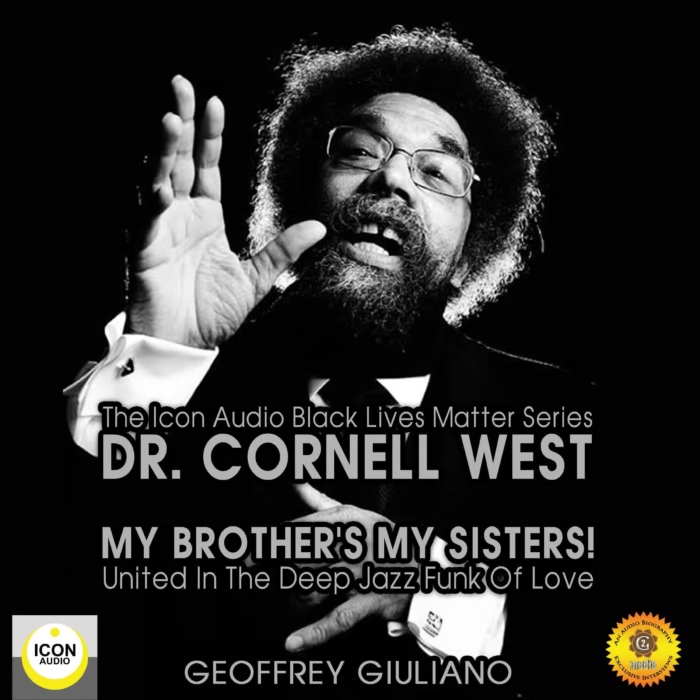
The Icon Black Lives Matter Series: My Brothers. My Sisters; United in the Deep Jazz Funk of Love
Geoffrey Giuliano
Audible Audio, 2020
The Eagle, the Peacock, and the Saw
Over the weekend I listened to an eclectic collection of lectures by Cornel West, compiled by Geoffrey Giuliano. Audible, the bastards, gave me a preview, and I was so taken with the rhetoric, the charisma, and the sheer force of the speaker that I rushed to buy the whole thing. I was completely swept away.
West talks about social justice, about the individual’s responsibility to the community, about the eagle and the peacock. And he does all of it while drafting 400 years of oppression and injustice against Black people into the service of his arguments (I’ll say Black, not African American; that’s West’s own word, and anything else would betray his point), along with an impressive arsenal of rhetorical techniques: rhythm, tone, intimacy with his listeners.
The further I listened, the more the spell wore off. I sobered up as I took his arguments apart. They irritated me, they outraged me, and finally, when he spoke about the Israeli-Palestinian conflict, they set my anger on fire. West is what I call the radical progressive left. He sits on a branch of love, justice, and integrity, and saws it off himself every time he reaches the Middle East. I’d be happy to hold the saw for him.
Will Love Conquer All?
"I am who I am because somebody loved me."
"So all this talk about being self-made … it’s a lie."
West’s starting point is the love he received from his family and from the Black community. West comes from a Black family that made the American dream come true. His mother was a teacher and a school principal, his brother graduated from Berkeley, and West himself received an excellent education at the most prestigious universities of the Ivy League, Harvard and Princeton, and later taught at both, and at Yale.
The love in whose light he grew and soared like an eagle pushed him toward achievement, grades, and education. When he arrived at Harvard, his father told him:
"all I ask of you is that you do your best in your grades. But you never forget to be a certain kind of person, a certain kind of human being who never sells your soul for a mess of pottage."
We’ll come back to West’s eagle later. For now I’ll just note this: achievement and integrity, which that love held side by side without any contradiction between them, will come apart in West’s hands.
Integrity will swell into an almost obsessive moral demand on the Black community, and above all on its leaders and on the Black people who have made it: to live out social solidarity and to act for the sake of the disadvantaged Black population. It is a demand grounded in the debt the successful individual owes the community that raised him, even at personal cost.
Achievement, on the other hand, will acquire a dubious status. The grades, the degrees, and the career his father asked him to excel at will become, in West’s hands, a temptation to be suspicious of: a peacock flaunting its feathers.
And quite separately, love in West’s hands grows another head, like the Hydra: love your enemy. Not because of any debt, since obviously the enemy didn’t raise him or love him, but because every human being is created in God’s image. West rejects the most natural thing for a person who has been wronged: his concept of love rules out hatred and revenge entirely. And yet it has room for Huey Newton, who followed police officers while armed, and can see in him a man who was "just loving you."
The Eagle and the Peacock
One of West’s most impressive and powerful rhetorical images is the peacock and the eagle. The peacock, he says, struts and shows off: "Look at me, look at me, look at me." And why? "Peacocks strut because they can’t fly" (actually, peacocks can fly, but let’s not be petty). Against it he sets the eagle: "Be an eagle the way the Reverend C.L. Franklin preached. The eagle stirs his nest."
The image comes from the famous sermon of the Reverend C.L. Franklin, Aretha Franklin’s father, on Deuteronomy 32:11: "As an eagle stirreth up her nest, fluttereth over her young." The eagle stirs up the nest so that the young will leave it and learn to fly on their own.
The peacock stands for a success that craves visibility and love. The eagle flies because it was loved. It stands for independence, integrity, and moral greatness. West asks his listeners to be eagles, not peacocks.
But while the audience enjoys seeing itself in the successful, moral eagle, West turns the tables on them. It turns out that his eagle isn’t measured by flight but by loyalty: "be true to those who shaped you." Whoever fell in love with his own image as an eagle discovers that he is exactly the one being sent back to the nest. An eagle that flies far and doesn’t return is, in West’s eyes, a sellout, one who sold his birthright for a mess of pottage, and he is demoted to peacock. And so West demands that the eagle, even at the height of its success, make a U-turn, recalculate its route, remember 400 years of injustice, and return to the nest to carry on its back the members of the community who never managed to spread their wings and fly.
Except that West doesn’t finish the verse: "spreadeth abroad her wings, taketh them, beareth them on her wings." Yes, the great eagle carries its young on its back, in order to teach them to fly. Every eagle carries its own young, and when the young grow up, they will carry theirs.
West turns the natural order upside down: he demands that the fledgling who has learned to fly come back and carry the entire nest.
And there’s a double irony here. West laments the shift from "we" consciousness to "I" consciousness, and the erosion of solidarity in the Black community. And in the same breath he picks, as his symbol of solidarity, the eagle: a bird that doesn’t live in a flock, whose nest is only a way station, and whose entire parenting is designed so that the fledgling will leave and fly alone.
And if West took his eagle from Franklin’s sermon, to an American ear the eagle is first of all the national symbol of the United States, the symbol of its freedom and independence. West, who criticizes America sharply in nearly every sentence, chose precisely this symbol, and chained it to the nest.
The Black Man’s Burden
In a lecture at the California Institute of Integral Studies in San Francisco, most likely in the spring of 2015, West declares: "To be successful is to be a copy, rather than an origin." A strange claim, coming from a man whose story is layered with success and fame.
To understand the full weight of West’s argument, we need to take a step back. The world West describes is full of injustices and catastrophes inflicted on the Black community. As far as he’s concerned, they have gone on for 400 years, and one of the paths open to Black people is to put on the armor, summon the courage, and sing.
Not only metaphorically. Actually sing. The blues and jazz are Black people’s gift to the world. And so the voice serves him in a double sense: the singing voice and the political voice.
There is no blues without a voice of your own. And so, when West looks at today’s America and sees "more echoes than voices," he concludes that to succeed is to be a copy.
And then he sees before him "Sister Beyoncé." The greatest entertainer of her generation, he says, with "a lot of energy and talent." But, he adds, "you ain’t Aretha. You know that." And he immediately clarifies: "that’s not a put down, that’s a description." And what is Professor West looking at?! Her ass (sorry, not only. Every move of her body):
"Because she’s part of a culture of superficial spectacle. She got to look a certain way. She got to seem a certain way. She got to appear a certain way. And given the highly sexualized character of predatory capitalist culture, she got to shake a thing in a certain way."
In a lecture on the burden of the Black man, he chooses to single out the most successful Black artist of her generation, a woman in control of her work and her independent voice, who in the most basic sense fulfills West’s own call. And she gets labeled a copy, followed by a string of descriptions of her body, her movements, and her looks. And not one damn word about her voice, that is, about what West himself defined as the essence.
So what does Aretha have that Beyoncé doesn’t? According to him, Aretha just grabs the microphone and sings from her soul, "echoing" Sam Cooke and the Soul Stirrers. Wait, echoing? A minute ago he was complaining that America has too many echoes. Apparently an echo is fine, as long as it echoes the right tradition. West isn’t measuring originality. He’s measuring loyalty, exactly as with the eagle.
Beyoncé apparently hadn’t suffered enough for West’s taste for her voice to count. Just a year later she released Lemonade, an album about betrayal, pain, and the history of Black women, woven through with the voice of Malcolm X. The blues, exactly by West’s own definition.
And What About Just a Decent Person?
As I listened, one of West’s positions made me increasingly uncomfortable: "Success is one thing. Freedom is something else." Individual success, he says, is not the same as freedom. True freedom means breaking free of the need for approval, status, and money, and staying loyal to the community that raised you, even at personal cost.
And that poor wretch who worked so hard to reach the American dream and never sold his soul to anyone? In West’s world, he has no name. There’s the eagle who returned to the nest, and there’s the sellout who sold his birthright for a mess of pottage. Whoever stands in between is left, for lack of choice, with only one place: next to the peacock.
And what is the peacock’s great sin? What has West so worked up? That it spreads its feathers and asks for recognition of its achievements.
His demand is very specific. Although the moral duty he imposes supposedly applies to Black and white alike, he demands, quite pointedly, that the Black middle class not settle for personal success and that it pay its historical debt to the community.
What astonishes me is that in that very lecture, while attacking Obama, West himself says that most of the Black middle class is middle class in name only: "If they missed two checks, they broke too." Two missed paychecks, and they’re broke. So who exactly is he asking to carry the nest? People who are themselves on the verge of falling out of it?
The gap between his fit of rage at Obama (and one can rage at Obama, I’m not against it, there’s plenty to rage about) and the weight of the moral debt he places on that same brittle middle class exposes an unresolvable dissonance in West’s approach.
So what about just a decent person? As I see it, a decent person takes care of himself first, of his home, and of the next generation. He works, pays taxes, treats others fairly, and raises his voice when he sees injustice. That isn’t indifference, and it isn’t betrayal. And the responsibility to fix social injustice should not fall on an individual who has barely climbed his way up. That’s what a state is for.
And a decent person, first and foremost, protects his home. Including from those who come to kill him.
On the Conflict: Why Does the Hydra of Love Stop Growing When It Reaches Israel?
West often turns to what so many celebrities love to turn to: the Israeli-Palestinian conflict. By celebrities I don’t mean the assorted social media influencers or artists, but anyone who thinks they have important things to tell the world and doesn’t live here. (And yes, I know, I don’t live in Sacramento either, so I won’t judge West by where he lives. I’ll judge him by his own standards.)
I have to say I was pleasantly surprised that West gives weight to the Holocaust and to the violence the Jews have endured. He acknowledges the suffering of the Jewish people. And unlike other speakers who slide into antisemitism, I didn’t detect in him a voice that could be called antisemitic. And yet it is precisely here that he fails the test he himself set, and I’ll explain.
Remember: like the Hydra, West’s love has several heads. West preaches to us: love your enemy. And from that he also derives the supreme moral commandment of his teaching: the refusal to answer terror with terror.
In April 2024, while running for president of the United States as an independent, West sat in a CNN studio across from anchor Abby Phillip and managed to surprise his listeners once again, this time for the worse. He described the October 7 massacre as a "counterterrorist response." He conceded that Hamas has "some responsibility" for harming civilians, but hurried to clarify: "Hamas is not the culprit, it’s the IDF." In other words, he’s telling us: folks, don’t confuse me, the guilty party is the IDF, and Hamas is just responding.
Asked whether Hamas should release the hostages in exchange for a ceasefire, he answered that the one who needs to stop is Israel. Ta-da.
With one laundered phrase, he turns massacre, rape, and the mass kidnapping of civilians from their beds into a "response." Exactly the acts he was so proud that Black Americans never committed.
West’s words deserve careful listening. The charismatic orator who describes lynching in words that send shivers and cries of protest through an entire hall, who speaks of Black people in terms of trauma, terror, and stigma, describes the massacre, rape, and kidnapping of innocent civilians with the words "some responsibility" and "harming civilians." When he wants to, West knows how to let suffering speak. Here he chose to let it whisper.
To his credit, two days later, in an interview on NJ PBS, asked explicitly about the massacre, he said: "Murder is murder, brother. Murder is wrong." And I believe him. But in the same breath he again called Hamas a "counter-terrorist organization" whose context must be understood.
West doesn’t hesitate for a moment, and in the middle of the interview, without a trace of irony, he declares: "I believe in being morally consistent." I choked.
Now we need to go back to his lectures from 2015 and 2018.
West took pride in the fact that after 400 years of terror, Black Americans never formed "a black al Qaeda or a black ISIS." And he goes on: "If we had opted for terrorism rather than love, America would already be fascist." In other words, he credits the very existence of American democracy to Black people’s refusal of terror. That, in his eyes, is the moral greatness of the oppressed.
Astonishingly, by 2024, terror has become, for him, an understandable response.
I was confused. I asked myself: what’s going on here? A slip of the tongue? Or perhaps a maturing of the vision of loving one’s enemy? Where did the parent’s pride go, the pride in his moral children who for 400 years fought injustice and still refused to answer with terror?
But it wasn’t a slip of the tongue. West said it on CNN and repeated it on PBS two days apart. And when asked to clarify whether he really meant "counterterrorist response," he answered: "Oh, absolutely."
To understand where this comes from, we need to expose the hidden analogy underlying his position. West projects the American drama onto the Middle East: Israel is "white, oppressive America," and the Palestinians are "Black people under 400 years of oppression and racism." The evidence lies in a single word. Of Black Americans, he says they were terrorized for 400 years. Of the Palestinians, in the PBS interview, he speaks of "a context of Palestinians being terrorized." Same word, same frame.
It’s an easy and seductive analogy for an orator like him. It automatically hands the Palestinians the moral capital accumulated by the Black freedom struggle in America.
But the analogy collapses under its own weight.
The first reason is structural. The civil rights movement led by King did not seek to destroy the United States or to establish a separate state in its place. It demanded inclusion.
The civil rights struggle asked white Americans to keep the Constitution’s promise to Black people as equal citizens of the same country. The Palestinian national struggle, by contrast, even in its moderate versions, is a struggle over sovereignty, over territory, and over the "right of return." And in Hamas’s version, also over the negation of Jewish sovereignty ("From the river to the sea, Palestine will be free").
Dressing the Palestinian national struggle in the clothes of Selma and Montgomery is an intellectual distortion that blurs the very nature of the conflict.
The second reason for the collapse lies in the rule West himself laid down. We’ve already seen that in his lectures he returns, again and again, to his pride that through 400 years of slavery, lynching, and racism, the Black community in America never formed "a black al Qaeda." It never chose the murder of innocents as a weapon. He invokes Mamie Till, the mother of Emmett Till, a fourteen-year-old boy brutally murdered in 1955. She chose an open casket so that all of America would see the horror, yet she refused hatred and revenge. That, according to West, is the supreme moral victory of Black America.
And here, in April 2024, West sawed off the branch he was sitting on. Asked about October 7, he chose the term "counterterrorist response."
And yet he has a tool made for exactly this. In "The Iron Wall," Jabotinsky understood Arab opposition perfectly well: "every people that dwells in its land, whether civilized or savage, sees its land as its national home." West, for his part, understands Jabotinsky. Of his position, let’s dominate, because we can no longer trust anybody, West says in a 2018 lecture at Brown: "look at the history of Jews, understandable, not justifiable." Understandable, but not justifiable. (A rather simplistic and extreme summary, by the way, of a man who wrote in that same essay that there would "always be two peoples" in the Land of Israel, but let’s leave that aside.)
In other words, West knows perfectly well how to distinguish between understanding and justification. When it comes to the Jews, historical trauma explains but does not justify. When it comes to Hamas, the distinction disappears. West, who presents himself as a moral lighthouse, blurs the line between "understandable" and "justifiable" with laundered rhetoric.
If the moral power of the Black struggle came from its sweeping refusal of terror, then the moment Hamas adopts the methods of ISIS and al Qaeda, it cannot be granted the same moral capital.
The third reason is that Israel is not "white America," and West’s analogy misses this entirely. Israel is not a colonial power of well-fed Anglo-Saxons who enslaved another people for profit. It is the refuge of a persecuted people who survived total annihilation. West himself admits as much and mentions the Holocaust.
Israel is also the home of hundreds of thousands of refugees whose communities were erased from Arab countries, and whose descendants make up a large part of the people of Zion today. The Jews of Yemen, who arrived "on eagles’ wings," and their brothers and sisters from Iraq and Morocco, returned to their national nest. They didn’t come here as imperialist conquerors on behalf of Europe. They returned to their only home as uprooted refugees.
This doesn’t mean there is no occupation, or no real Palestinian suffering. It means that the American drama, white versus Black, doesn’t fit this conflict. The Middle East is not an encounter between "privileged whites" and "oppressed people of color," but a tragedy of two peoples wounded and scarred by history.
My Answer to West, Brother
In West’s theology of love, there is no room for the instinct of "if someone comes to kill you, rise early and kill him first." There is no order of priorities either. In the Jewish source, this is not a commandment to murder or a lust for blood, but the setting of a basic moral order of priorities: first of all, a person’s right and duty to protect his life, his home, and his children from whoever comes to kill him. It isn’t revenge. It’s a moral refusal to die.
Against the rhetorical sublimity of West, who can see the neo-Nazis who spat at him as "thugs made in the image of God," stands the figure of Rachel Goldberg-Polin, mother of Hersh, who was kidnapped on October 7 and murdered in Hamas captivity. She spoke out of bottomless pain, looked the world in the eye, expressed concern for every innocent person, and never for a moment gave up the demand to bring her son home. This is not theoretical love in prestigious lecture halls. This is love anchored in concrete responsibility for her own nest.
West demanded that the Black eagle return to the nest and carry 400 years of injustice on its back. But when the Jewish eagle left the valley of slaughter, gathered its young from Yemen and from Europe, and built itself a sovereign nest, the moment it defends that nest, West sees it as the hunter: "Hamas is not the culprit, it’s the IDF." His brilliant rhetoric, the very rhetoric that first held me under its spell, turns into moral blindness.
In the end, in West’s world, no one is free.
America’s symbol of freedom, chained to the nest.
West keeps on sawing. I, as I said, am only holding the saw.
לגלות עוד מהאתר Sivi's Books
Subscribe to get the latest posts sent to your email.