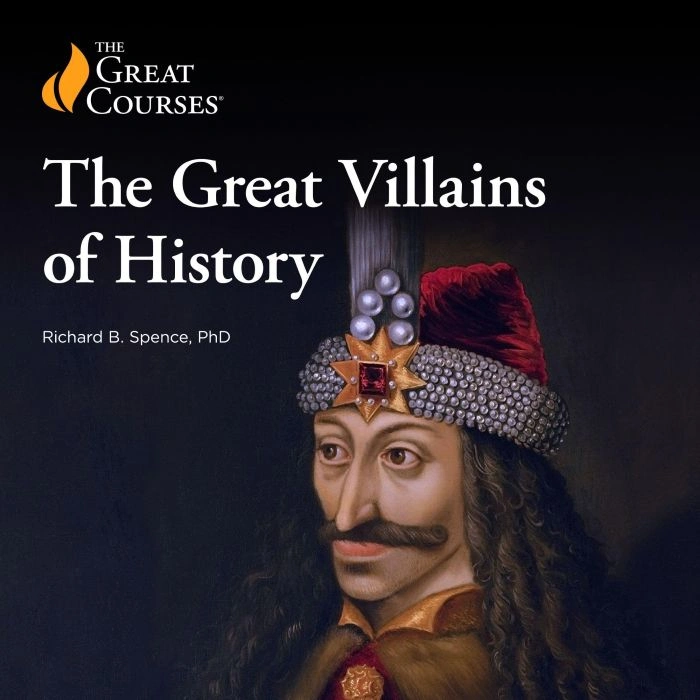
נבלים, מיתוסים ואנשים שפשוט היו בלתי נסבלים.
סיימתי את סדרת ההרצאות The Great Villains of History של ריצ׳רד ב׳ ספנס, והיא מעניינת בעיקר כשהיא מעצבנת. זו המחמאה המדויקת ביותר שאפשר לתת לה.
נקודת המוצא שלה מצוינת: מה הופך אדם לנבל היסטורי? רוע ממשי, כוח חסר רסן, מיתוס שנבנה בדיעבד, או סתם אישיות שערורייתית שזכתה במקום ברשימה. בפרקים הטובים, ספנס משרטט במדויק כיצד אדם פרטי הופך את שיגעון הגדלות שלו למערכת.
מה שצריך לדעת
סדרה של 24 הרצאות מאת Richard B. Spence שבוחנת יותר משבעים דמויות היסטוריות דרך השאלה מה הופך אדם לנבל, ואיפה עובר הגבול בין פשע ממשי, כוח, מיתוס ופולקלור.
למי שאוהבים היסטוריה פוליטית, דיקטטורים, פשע היסטורי, מיתוסים, פסיכולוגיה של כוח והשוואות בין דמויות מתקופות שונות.
הפרקים הטובים מראים כיצד אישיות פרטית, אידיאולוגיה ומערכת מוסדית מתחברים לכוח היסטורי. הפרקים על הימלר, היטלר, טמרלן ומשטרים טוטליטריים חדים במיוחד.
המושג "נבל" נמתח לעיתים רחוק מדי. כשאותה מסגרת כוללת רוצחים המוניים, דמויות שהמוניטין שלהן נבנה ממיתוס ושרלטנים צבעוניים, ההבחנה בין פשע היסטורי לפולקלור מתחילה להיטשטש.
בפרק על היטלר, ספנס לא מסתפק באבחנה השחוקה שהוא היה מפלצת. הפרק בוחן את הפער בין טירוף לתכנון מחושב, ומזכיר את הסכנה בהסבר פסיכיאטרי. היטלר לא נזקק לטירוף קליני כדי לפעול; די היה באופורטוניזם, בהיעדר מעצורים, ובשנאה שימושית מול המוני אנשים שהעדיפו לא לראות.
ההשוואה בין אטילה ההוני, טמרלן ונפוליאון חושפת את הרגע שבו שיגעון גדלות פרטי הופך לכוח היסטורי. טמרלן נמצא בליגה אחרת של זוועה: הוא הפך אימה לשיטת ממשל, והאכזריות אצלו הייתה מסר פוליטי מחושב. הסכנה אינה מתחילה באדם שמשתגע, אלא ברגע ששיגעון פרטי מגייס צבא, פקידים, תקציב ודגל.
הפרק על לנין ומוסוליני מציג שלטון שבו אישיות אחת בולעת את המוסדות. לנין מופיע כמהפכן קר ואופורטוניסט גמור: מי שרצה בתבוסת ארצו ונעזר בכסף גרמני כדי לערער את רוסיה מבפנים מוכיח שאידיאולוגיה נוקשה מסתדרת מצוין עם קופה פתוחה. מוסוליני הוא סכנה תיאטרלית יותר. הבוז שלו לשוויון הסביר הכול: שוויון, לשיטתו, גוזל מאנשים יוצאי דופן את מעמדם הטבעי. ובמקרה, האיש יוצא הדופן היה הוא עצמו.
הפרק המדויק בסדרה מוקדש להימלר. הוא מצמרר דווקא משום שהימלר אינו מפלצת דרמטית; הוא אפרורי, חסר ברק, ופקיד חרוץ להחריד. הימלר לקח את האס־אס מכוח של מאות בודדות והפך אותו למנגנון השמדה של מליונים. רוע היסטורי אינו זקוק תמיד לנואם כריזמטי; הוא זקוק לאיש שיודע לנסח נהלים, לחלק סמכויות ולוודא שהרכבות לגיהינום יוצאות בזמן.
היטלר סיפק את המיתוס. הימלר ניהל את האופרציה.
לצד אלה, ישנם פרקים שבהם ספנס מבלבל בין נבלים לפולקלור. פרק ה־Femme Fatale קורס לקלישאות: לוקרציה בורג׳ה מופיעה מכוח האגדה ולא מכוח הראיות. היא חיה בין גברים אלימים ומושחתים, וההיסטוריה הלבישה עליה את פשעיהם בתוספת רעל ומיניות. ככה נולדת דמות טובה לסיפור. לא בהכרח נבלית היסטורית.
אליזבת באתורי בעייתית באותה מידה. מיתוס הרוזנת הטובלת בדם בתולות ניצח, פשוט מפני שאישה אריסטוקרטית ומפלצתית מוכרת טוב יותר מעדויות מסובכות. מיתוס אפל אינו הוכחה לנבָלוּת; לפעמים מדובר בקורבן של סיפור מוצלח מדי.
עצם הכללתן תחת הכותרת Femme Fatale משמרת במידה מסוימת את המיתוס שהפרק עצמו מנסה לפרק.
הבלבול הזה מגיע לשיא בחיבור בין טורקמדה, רספוטין ואנטון לה־ויי. טורקמדה ניהל רדיפה ממוסדת, עינויים וגירוש; הניסיון למסגר אותו כמי שהכניס סדר רק מוכיח שבירוקרטיה יודעת להיות מנומסת גם כשהיא מחזיקה צבת. אבל רספוטין ולה־ויי מותחים את המושג עד קריסה. שרלטן שיודע לנצל חולשה ואיש יחסי ציבור בגלימה שחורה אינם נבלים היסטוריים. שרלטנות אינה מנגנון השמדה, ואין סיבה לנקות את הקהל שהפקיר מרצון את שיקול דעתו מול אחיזת עיניים.
גם הפרק על סטלין מחמיץ כשהוא מתעכב על הגזמות ומיתולוגיה במקום על עוצמת המעשים. אצל סטלין המציאות מספיקה, ואין צורך להישען על בדיות.
ובכל זאת, הסדרה שווה האזנה מפני שהיא חושפת עד כמה המושג "נבל" נזיל: בין מי שחולל זוועות, מי שהפסיד בקרב על הנרטיב, ומי שהיה סתם נוכל בלתי נסבל.
הנבל ההיסטורי לעולם אינו עובד לבד.
הוא זקוק לפקידים, למממנים, ולאנשים הגונים לכאורה שמוצאים נימוקים מלומדים לשתיקה.
לפעמים הנבל הוא פשוט האדם הראשון שהבין עד כמה המערכת מוכנה לעבוד בשבילו.
The Great Villains of History/ Richard B. Spence
Villains, myths, and unbearable people.
I finished Richard B. Spence’s lecture series The Great Villains of History, and it is most interesting when it annoys me. That is probably the most accurate compliment I can give it.
Its starting point is excellent: what makes someone a historical villain? Genuine evil, unchecked power, a myth constructed afterward, or simply an outrageous personality that somehow earned a place on the list? In the strongest lectures, Spence shows with great precision how private megalomania becomes a system.
In the lecture on Hitler, Spence does not settle for the tired diagnosis that Hitler was a monster. The lecture examines the gap between madness and calculated planning, and reminds us of the danger of psychiatric explanations. Hitler did not need to be clinically insane to act; opportunism, lack of restraint, and useful hatred were enough when combined with masses of people who preferred not to see.
The comparison between Attila the Hun, Tamerlane, and Napoleon exposes the moment when private megalomania becomes historical power. Tamerlane operates on another level of horror entirely: he turned terror into a method of government, and cruelty into a calculated political message. The danger does not begin with a man going mad, but with the moment his private obsession recruits an army, officials, a budget and a flag.
The lecture on Lenin and Mussolini presents forms of government in which one personality swallows the institutions around him. Lenin appears as a cold revolutionary and a complete opportunist: a man who wanted his own country to lose and accepted German money to undermine Russia from within proves that rigid ideology gets along perfectly well with an open purse. Mussolini represents a more theatrical danger. His contempt for equality explained almost everything: equality, in his view, robbed exceptional people of their natural status. Conveniently, the exceptional man was always Mussolini himself.
The most precise lecture in the series is the one devoted to Himmler. It is chilling precisely because Himmler is not a dramatic monster; he is grey, unimpressive, and terrifyingly diligent. Himmler took the SS from a force of only a few hundred men and turned it into an extermination apparatus operating on a scale of millions. Historical evil does not always need a charismatic speaker; it needs a man who knows how to draft procedures, divide responsibilities, and make sure the trains to hell leave on time.
Hitler supplied the myth. Himmler ran the operation.
Alongside these lectures, there are episodes in which Spence confuses villains with folklore. The Femme Fatale lecture collapses into cliché: Lucrezia Borgia appears because of the legend rather than the evidence. She lived among violent and corrupt men, and history dressed her in their crimes with an added layer of poison and sexuality. That makes for a good story. It does not necessarily make for a historical villain.
Elizabeth Báthory is just as problematic. The myth of the countess bathing in the blood of virgins won because a monstrous aristocratic woman sells better than complicated evidence. A dark myth is not proof of villainy; sometimes it is simply the victim of a story that became too successful.
The very fact that they are included under the heading Femme Fatale preserves, to some extent, the myth that the lecture itself is trying to dismantle.
That confusion reaches its peak in the grouping of Torquemada, Rasputin and Anton LaVey. Torquemada presided over institutional persecution, torture and expulsion; the attempt to frame him as someone who merely imposed order only proves that bureaucracy can remain polite even while holding the pincers. Rasputin and LaVey, however, stretch the concept almost to the breaking point. A charlatan who knows how to exploit weakness and a publicity man in a black robe are not historical villains. Charlatanism is not an extermination system, and there is no reason to absolve the public that willingly abandoned its judgment in the face of spectacle and deception.
The lecture on Stalin also misses the mark when it spends too much time on exaggeration and mythology instead of the scale of what actually happened. With Stalin, reality is enough—no need to rely on inventions.
And yet the series is worth listening to because it reveals just how fluid the concept of “villain” really is: somewhere between those who committed atrocities, those who lost the battle over the narrative, and those who were simply unbearable frauds.
The historical villain never works alone.
He needs officials, financiers, and apparently decent people who can produce educated arguments for remaining silent.
Sometimes the villain is simply the first person to understand how willing the system is to work for him.
לגלות עוד מהאתר Sivi's Books
Subscribe to get the latest posts sent to your email.