המאמר התשיעי בפרויקט Sivi קוראת צ’וסר
Please scroll down for an English review.
אחרי הנזירה שמבריקה, הנזיר שמתהדר בפרווה, הוברט שמוכר כפרה, והסוחר שמוכר אוויר, צ’וסר עושה תרגיל חד. הוא מביא מחט.
הפקיד מאוקספורד הוא אחד הדיוקנאות האידיאליים של צ'וסר. הוא שבירת רצף. סיכה שמוציאה את האוויר מהבלון.
אם עד עכשיו ראינו אינפלציה של ערכים, עוד קישוטים, עוד מילים, עוד הצגות, הפקיד הוא דמות שמכריחה אותנו לשמוע שוב את הדבר הכי לא אופנתי בפרולוג: אמת.
הכניסה: אין פה ויטרינה
"סוּסוֹ –יעה צנום…
וְהוּא עַצְמוֹ… לא רב ולא עצום."
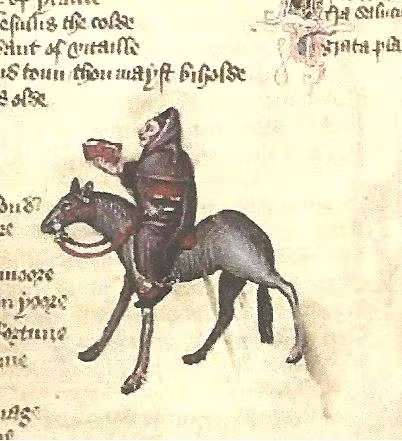
אחרי כל בעלי החיים המפונקים, הפעמונים, הפרוות, האוכפים, והסביאה, פתאום נכנס שלד. והוא לא מסתיר את זה.
וזה מה שמכה ראשונה: שקיפות רדיקלית. אין פער בין החוץ לפנים. אין "פרצוף אנין". אין בועה.
בעולם שבו הסוחר מתלבש כמו אציל כדי להסתיר חוב, הפקיד עושה את ההפך. הוא עני, והוא נראה עני. זו לא מסכנות. זו עמדה.
האלכימיה ההפוכה: זהב הופך לספרים
"כִּי כָּל מַה שֶּׁנָּטַל מִידִידָיו,
הוֹצִיא עַל סְפָרָיו וְתַלְמוּדָיו."
זו השורה שמפרקת את השיירה כולה.
הוברט לקח רוח והפך אותה לכסף. הסוחר לקח כסף והפך אותו לחוב. הפקיד לוקח כסף והופך אותו לידע.
לא יוקרה, לא אוכל, לא שדרוגים. ספרים.
וצ'וסר עצמו קורץ:
"ואף כי פילוסוף היה, / זהב מעט בתיבתו היה."
"פילוסוף" בימי צ'וסר היה גם אלכימאי, מי שמחפש את האבן שהופכת כל דבר לזהב. הפילוסוף הזה עושה את ההפך: הוא לוקח את הזהב והופך אותו לספרים.
עשרים כרכים של אריסטו, כרוכים בשחור ובאדום, ליד ראש המיטה. בעולם שבו כל ספר הועתק ביד, זה הון של ממש. הכרכים האלה הם החלטה: להשקיע את ההון במטבע שלא נסחר בשוק.
וכאן מגיע הביטוי שלי למה שצ’וסר עושה איתו: האפיסטמולוגיה של הרעב. במילים פשוטות: אצל הפקיד, כדי שהראש יתמלא, הבטן נשארת ריקה.
הוא מרעיב את הגוף כדי להאכיל את המחשבה.
"סִדְרַת כְּרָכִים שֶׁל אָרִיסְטוֹטֶלֶס…
וְלֹא בִּגְדֵי חמדה, כִּנּוֹר, עוּגָב."
הבחירה פה לא "ספרים מול בידור". זו בחירה בין חיים בתוך משחק הנראות, לבין חיים בתוך אמת שאין לה אבזמים.
כלכלת מילים: סוף לאינפלציה
"וְלֹא אָמַר מִלָּה שֶׁלֹּא לְצֹרֶךְ…
וּבְקִצּוּר, וְרַק אֶת הָעִקָּר."
הסוחר "הודיע ברמה", ודבריו הדהדו תמיד את גידול רווחיו. הוברט שר, מסלסל, ומוציא פרוטה אחרונה גם מאלמנה יחפה בזכות ה-In principio המתוק שלו. הנזירה מדברת צרפתית מעושה. אצל כולם המילים הן שיווק.
ואז צ'וסר משתמש באותה מילה בדיוק. גם הדיבור של הפקיד מהדהד, אבל: "במידות טובות הדהד דיבורו". אותו פועל, הון אחר.
אצל הפקיד, המילים הן משמעת. מילה שלא לצורך היא חוב. וכשאין חוב, יש כיסוי מלא. לכן כשהוא כן מדבר, יש לזה משקל.
הפאנץ’: החופש היחיד בשיירה
בסוף צ’וסר נותן לו שורה שהיא תמצית של אופי:
"אָהַב לִלְמֹד וּלְלַמֵּד אָהַב."
זה המשפט שמביך את כולם.
כי הוא מציב אפשרות שהדמויות הקודמות ניסו להכחיש: יש חיים שלא נמדדים בכסף, בנראות, בהכנסות, או במי הצליח למכור למי.
✨ הציר שעליו מסתובבת התמונה
אם הסוחר הוא קפיטליזם בלי שם, הפקיד הוא אקדמיה בלי משכורת.
גם הוא חי מכסף של אחרים. הוא לוקח מחבריו, ומשלם בתפילה לנשמותיהם.
אבל זה כל ההבדל: הוברט מוכר מה שאין לו. הפקיד נותן מה שיש לו.
ובעולם שבו הכול נמכר באשראי, זה כושר הפירעון היחיד שאי אפשר לזייף.
📚 The Oxford Clerk: The One Truth You Can’t Buy
The ninth essay in the Sivi Reads Chaucer project
After the Prioress who gleams, the Monk who parades around in fur, Hubert who sells absolution, and the Merchant who sells air, Chaucer makes a sharp move.
He brings in a needle.
The Oxford Clerk is not a "good character." He breaks the pattern. A pin that lets the air out of the balloon.
If until now we have been watching an inflation of values, more ornament, more words, more performance, the Clerk forces us to hear the least fashionable thing in the Prologue:
Truth.
The entrance: no display window here
"His horse was thin…
And he himself… was not exactly stout."
After all the pampered animals, the bells, the furs, the saddles, and the feasting, suddenly a skeleton enters.
And he does not hide it.
That is the first thing that strikes: radical transparency.
No gap between exterior and interior. No cultivated expression. No bubble.
In a world where the Merchant dresses like a nobleman to conceal his debt, the Clerk does the opposite.
He is poor, and he looks poor.
This is not wretchedness.
It is a position.
Reverse alchemy: gold becomes books
"For all that he received from his friends,
he spent on books and learning."
This line dismantles the entire procession.
Hubert took the spiritual and turned it into money.
The Merchant took money and turned it into debt.
The Clerk takes money and turns it into knowledge.
Not prestige. Not food. Not upgrades.
Books.
And a collection of Aristotle is not decoration. It is a decision: to invest capital in a currency that cannot be traded on the market.
This is where my phrase for what Chaucer is doing with him comes in:
the epistemology of hunger.
Put simply, with the Clerk, for the mind to be filled, the stomach remains empty.
He starves the body in order to feed thought.
"A collection of Aristotle…
rather than fine clothes, fiddle, or harp."
The choice here is not "books versus entertainment."
It is a choice between living inside the game of appearances and living inside a truth that has no buckles.
The economy of words: the end of inflation
"He never spoke a word unless it was necessary…
Briefly, and only to the point."
The Merchant speaks loudly. Hubert sings, trills, sells Latin, networks. The Prioress speaks affected French.
For all of them, words are marketing.
For the Clerk, words are discipline.
An unnecessary word is debt.
And when there is no debt, everything is fully backed.
That is why, when he does speak, his words carry weight.
The punchline: the only freedom in the procession
At the end, Chaucer gives him a line that is not simply praise. It is the essence of his character:
"Gladly would he learn, and gladly teach."
This is the sentence that embarrasses everyone else.
Because it introduces a possibility the previous characters tried to deny:
There are lives that are not measured in money, appearance, income, or in who managed to sell what to whom.
✨ The axis on which the whole picture turns
If the Merchant is capitalism without a name, the Clerk is academia without a salary.
He does not "fix" the procession. He does not take the reins.
He does something more dangerous:
He refuses to play.
And in a world where everything is sold on credit, that refusal is the only form of solvency that cannot be forged.
לגלות עוד מהאתר Sivi's Books
Subscribe to get the latest posts sent to your email.
