
Please scroll down for an English.
במרכז המישור החשוף בולטת דמות לבנה. קשה להחמיץ אותה, אבל קל לטעות במה שרואים. רק במבט נוסף מתברר שזו ילדה הקופצת בחבל. היא אינה נטמעת בנוף, אלא ננעצת בו: צללית דקה, בהירה, כמעט סימן. השמלה שלה נמשכת לאחור, הצל מתארך על פני הקרקע, והחבל משרטט לולאה באוויר, תנועה עגולה בתוך עולם שקפא.
סלבדור דאלי צייר את Landscape with a Girl Skipping Rope בשנת 1936 עבור פטרונו, האספן אדוארד ג'יימס. לפי מוזיאון בוימאנס ואן בנינגן, הילדה הקופצת בחבל מייצגת זיכרון ילדות מאושר. אלא שהזיכרון הזה מוצב בתוך נוף שאושר אינו חלק ממנו: אדמה חרוכה, מרחב ריק ומבנים שנראים כשרידים שנותרו אחרי אסון. הילדה קופצת בחבל בעולם שנראה כאילו הגיע אל קצו.
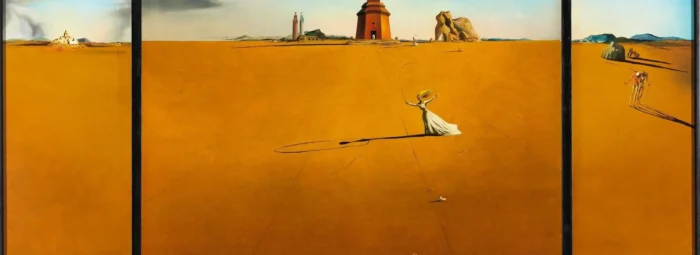
היא קופצת לבדה במרחב שאין בו זמן. הצל שלה נמתח כמו נוכחות נוספת, דבר קבוע שנותר קשור לגופה גם כשהיא ממשיכה לנוע.
דאלי מצייר את האופן שבו חלום פועל. החלום לוקח דבר מוכר, ילדה, חבל, מגדל, צל, ומנתק אותו מן ההקשר הרגיל שלו. הקשרים הסיבתיים נעלמים. היחסים בין הדברים משתבשים. הזמן חדל להתקדם כראוי. מה שנראה תמים נעשה מאיים, בלי שאפשר להצביע על הרגע שבו חל השינוי.
הסוריאליסטים חיפשו את הסדק הזה. הם לא ראו בחלום הפסקה מן המציאות, אלא מציאות אחרת, שבה אפשר לעקוף את ההיגיון ואת הסדר הרגילים. החלום מחבר זיכרון לכאב, גוף לנוף, תשוקה לפחד. הוא אינו כפוף ללוגיקה של העולם הער. הוא מניח את הדברים זה לצד זה ומאלץ להרגיש שקיימת ביניהם קרבה שקשה עדיין לנסח.
באגף הימני של הטריפטיכון מופיעות שתי דמויות שהמוזיאון מזהה כאפשרות לייצוג של דאלי ושל אחיו הבכור המת. אחת מהן נראית פצועה, כמעט מופשטת מעורה. האחרת עומדת לצדה. הילדה הקופצת בחבל אמורה לייצג זיכרון ילדות מאושר, אבל האושר הזה מתקיים לצד זיכרון של פציעה ומוות. היצירה מציבה אותם יחד, כאילו הילדות עצמה נושאת בתוכה גם משחק וגם אובדן. ובכל זאת, הילדה בהירה יותר ובולטת יותר. הפציעה והמוות נדחקים לשוליים, בזמן שהיא ממשיכה לקפוץ.
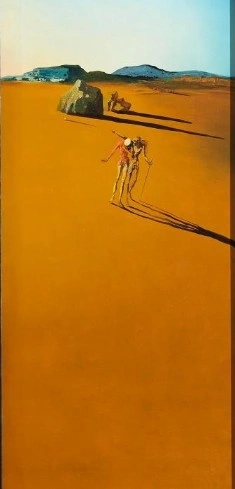
אחיו הבכור מת בשנת 1903, לפני שדאלי נולד. שמו היה סלבדור. תשעה חודשים לאחר מותו נולד בן נוסף, שנקרא גם הוא סלבדור. כך חיו בבית שני ילדים תחת אותו שם: אחד בגוף ואחד בזיכרון. דאלי סיפר שהוריו ראו בו תחליף לבנם המת, ושעליו היה להוכיח שהוא אדם אחר. הוא היה המציאות, אבל הזיכרון קדם לו ונשא את שמו.
פתאום הילדה במישור נראית אחרת.
היא עדיין קופצת. החבל עדיין מסתובב. בכל סיבוב היא עוזבת לרגע את הקרקע ונוחתת שוב כמעט באותה נקודה. תנועה מתמדת שאינה באמת מתקדמת. אין הוכחה שהילדה מייצגת את האח המת, ואין סיבה להפוך כל חבל לטראומה בתחפושת. ובכל זאת, קשה להתעלם מן העובדה שהילדה, המשחק, הכפילות והאח המת נפגשו באותה יצירה.
ואז הילדה נעלמה.
או לפחות כך נדמה.
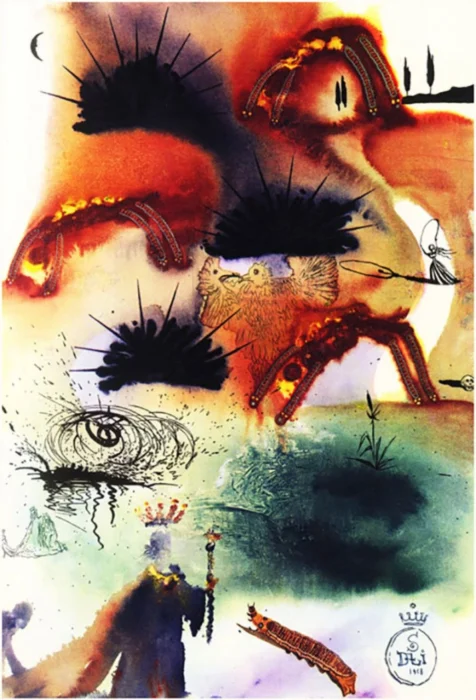
שלושים ושלוש שנים לאחר מכן, בשנת 1969, יצר דאלי סדרת איורים ל־Alice's Adventures in Wonderland מאת לואיס קרול. הוא לא העניק לאליס את המראה המוכר מאיוריו של ג'ון טניאל. אין כאן שיער בהיר מסודר או שמלה כחולה. בין האיורים חוזרת אותה צללית דקה, בשמלה ארוכה, וחבל מסתובב מעל ראשה.
הילדה מן המישור נעשתה אליס.
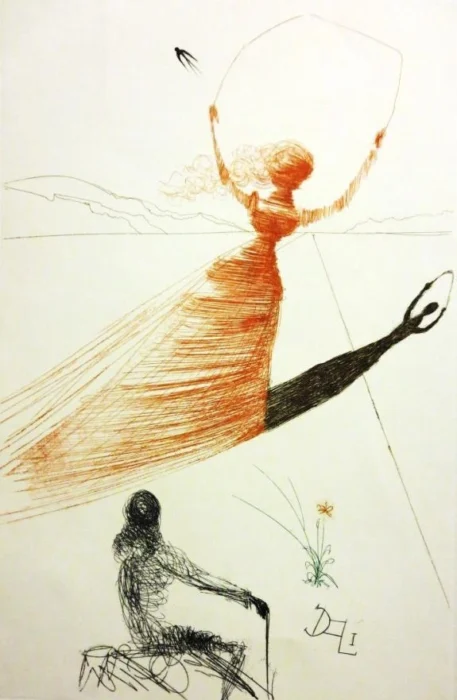
האיורים הם יותר מגרסה סוריאליסטית לספר מפורסם. דאלי מכניס אל תוך אליס דימוי שכבר היה שלו עשרות שנים. היא מגיעה אל הטקסט של קרול כשהיא כבר טעונה בזיכרון, בדממה, בצל ובכפילות.
ארץ הפלאות פועלת כמו חלום. אליס נופלת לתוכה במקום להיכנס אליה בדלת. גופה גדל ומתכווץ. מילים משנות משמעות. זמן, מרחב והיגיון מסרבים להישאר במקומם. יצורים מדברים אליה בביטחון מוחלט גם כשהם אומרים שטויות. סמכות אינה מבוססת על אמת, אלא על עוצמת הקול, על תואר או על כתר. זהו עולם שרירותי, ובדיוק משום כך הוא דומה באופן מטריד לעולם המבוגרים.
קרול היה לוגיקן ומתמטיקאי. בארץ הפלאות ההיגיון אינו נעלם, הוא מתקלקל. כולם מדברים בביטחון, מחלקים הוראות, שופטים ומענישים, גם כשהמילים עצמן איבדו משמעות. אליס אינה משתגעת שם. היא מגלה שהעולם שסביבה כבר משוגע.
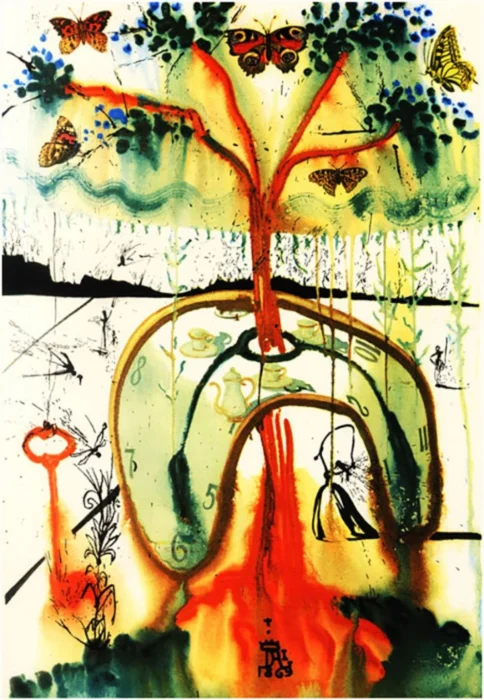
באיורים של דאלי, אליס אינה שולטת במרחב. לעיתים היא כה קטנה עד שהיא נעשית סימן בשולי התמונה. סביבה נפתחים כתמי צבע, עצים, פרפרים, קשתות, יצורים וצורות שאי אפשר להכריע אם הן חיות, נוף או מחשבה. היא אינה מרכז העולם. היא נקודת תנועה בתוכו.
החבל הוא הדבר שמאפשר לזהות אותה.
הוא מקיף אותה וחוצה את האוויר. לפעמים הוא נראה כמשחק, לפעמים כפתח, לפעמים כמסגרת שסוגרת עליה. כל עוד היא נעה, הלולאה נשמרת. ברגע שתעצור, היא תיפול.
גם אליס עצמה אינה מפסיקה להשתנות. היא גדלה ומתכווצת, שוכחת דברים שידעה ומתקשה לזהות את עצמה. לרגע היא אפילו חוששת שנעשתה אחת הילדות האחרות. במבעד למראה הכפילות מקבלת צורה ממשית: היא עוברת דרך ההשתקפות ונכנסת לעולם הפוך.
דאלי נולד לתוך כפילות מן הסוג הזה. הוא היה הילד החי, אבל הזיכרון שקדם לו נשא את שמו.
אצל אליס הגוף משתנה, העולם מתהפך והזהות מתערערת. ההשתקפות אינה מחליפה אותה. היא נשארת אליס.
קשה לדעת אם זה היה השיקול שהוביל את דאלי כשהחזיר את הילדה הקופצת בחבל אל איורי אליס. המפגש בין הביוגרפיה, הציור והספר בכל זאת חד מדי מכדי להיעלם: אדם שגדל לצד גרסה קודמת של שמו בוחר בדמות שעוברת בעולם של כפילויות, ועדיין נשארת היא עצמה.
אולי משום כך הילדה של דאלי אינה הולכת בארץ הפלאות. היא קופצת.
בכל פעם היא מתרוממת מן הקרקע ונכנסת לרגע אל חלל שבו הגוף משוחרר מכובדו. אחר כך היא חוזרת. החבל משלים עוד סיבוב. העולם סביבה משנה צורה, והיא נשארת במרכז התנועה.
דאלי הכניס אל חלומה של אליס משאלה שקשה יותר לצייר: לעבור דרך עולם שמתפרק, מוכפל ומשנה צורה, בלי למסור למישהו אחר את הזכות לקבוע מי אתה.
הילדה במישור הייתה שם עוד לפני שקראו לה אליס.
אולי רק בארץ הפלאות היא הצליחה להישאר היא עצמה.
The Girl Who Remained Alice: Salvador Dalí, Dreams and Identity in Wonderland
At the center of the exposed plain stands a white figure. She is difficult to miss, but easy to mistake for something else. Only on a second look does it become clear that this is a girl skipping rope.
She does not blend into the landscape. She is driven into it: a thin, pale silhouette, almost a sign. Her dress is pulled backward, her shadow stretches across the ground, and the rope draws a loop in the air, a circular movement inside a world that has frozen.
Salvador Dalí painted Landscape with a Girl Skipping Rope in 1936 for his patron, the collector Edward James. According to Museum Boijmans Van Beuningen, the girl skipping rope represents a happy childhood memory.
But that memory is set in a landscape where happiness does not belong: scorched earth, empty space, and structures that look like theremains left behind after a disaster. The girl skips rope in a world that appears to have reached its end.
She skips alone in a space without time. Her shadow stretches like another presence, something permanently tied to her body even as she continues to move.
Dalí paints the way a dream works. A dream takes something familiar, a girl, a rope, a tower, a shadow, and detaches it from its ordinary context. Causal connections disappear. The relationships between things become distorted. Time stops advancing properly.
What appears innocent becomes threatening, without our being able to identify the precise moment when the change occurred.
The Surrealists searched for that fracture. They did not see dreams as an interruption of reality, but as another reality, one capable of bypassing ordinary logic and order.
The dream connects memory to pain, body to landscape, desire to fear. It is not subject to the logic of the waking world. It places things beside one another and forces us to feel that some relationship exists between them, even before we can put it into words.
In the right panel of the triptych, two figures appear. The museum identifies them as possibly representing Dalí and his dead older brother. One looks wounded, almost stripped of his skin. The other stands beside him.
The girl skipping rope is supposed to represent a happy childhood memory, but that happiness exists alongside a memory of injury and death. The work places them together, as though childhood itself contains both play and loss.
And yet the girl is brighter and more visible. The injury and death are pushed toward the margins while she continues to skip.
Dalí’s older brother died in 1903, before Dalí was born. His name was Salvador. Nine months after his death, another son was born, and he too was named Salvador.
Two children therefore lived in the same house under the same name: one in a body, the other in memory.
Dalí said that his parents saw him as a replacement for their dead son, and that he had to prove he was a different person. He was reality, but the memory came before him and already carried his name.
Suddenly, the girl on the plain looks different.
She is still skipping. The rope is still turning. With every rotation, she leaves the ground for a moment and lands again almost in the same place. Constant movement that does not truly advance.
There is no proof that the girl represents the dead brother, and no reason to turn every skipping rope into trauma in disguise. Even so, it is difficult to ignore the fact that the girl, the game, the doubling, and the dead brother all meet in the same work.
Then the girl disappeared.
Or at least that is how it seemed.
Thirty-three years later, in 1969, Dalí created a series of illustrations for Lewis Carroll’s Alice’s Adventures in Wonderland. He did not give Alice the familiar appearance established by John Tenniel’s illustrations. There is no neatly arranged fair hair or blue dress.
Instead, the same thin silhouette returns throughout the illustrations, wearing a long dress and turning a rope above her head.
The girl from the plain became Alice.
The illustrations are more than a Surrealist version of a famous book. Dalí brings into Alice an image that had already belonged to him for decades.
She enters Carroll’s text already charged with memory, silence, shadow and doubling.
Wonderland works like a dream. Alice falls into it rather than entering through a door. Her body grows and shrinks. Words change their meaning. Time, space and logic refuse to remain in place.
Creatures speak to her with complete confidence even when they are saying nonsense. Authority is based not on truth, but on volume, title or crown.
It is an arbitrary world, and that is precisely why it resembles the adult world in such a disturbing way.
Carroll was a logician and mathematician. In Wonderland, logic does not disappear. It malfunctions.
Everyone speaks confidently, issues orders, passes judgment and threatens punishment, even when the words themselves have lost their meaning.
Alice does not go mad there. She discovers that the world around her is already mad.
In Dalí’s illustrations, Alice does not control the space. At times she is so small that she becomes a sign near the edge of the image.
Around her open stains of color, trees, butterflies, arches, creatures and shapes that cannot easily be identified as living beings, landscape or thought.
She is not the center of the world. She is a point of movement within it.
The rope is what allows us to recognize her.
It circles her and cuts through the air. Sometimes it looks like a game, sometimes like an opening, sometimes like a frame closing around her.
As long as she keeps moving, the loop remains intact. The moment she stops, she will fall.
Alice herself never stops changing either. She grows and shrinks, forgets things she knew, and struggles to recognize herself. For a moment, she even fears that she has become one of the other girls.
In Through the Looking-Glass, doubling takes on a physical form: she passes through the reflection and enters a reversed world.
[Image: Another illustration from the series, showing Alice as a small silhouette inside an almost abstract world]
Dalí was born into a doubling of this kind. He was the living child, but the memory that preceded him carried his name.
With Alice, the body changes, the world reverses itself and identity becomes unstable. The reflection does not replace her. She remains Alice.
It is difficult to know whether this was the thought that led Dalí to return the skipping girl to his illustrations of Alice.
Even so, the meeting between biography, painting and book is too precise to disappear: a man who grew up beside an earlier version of his own name chooses a figure who travels through a world of doubles and still remains herself.
Perhaps that is why Dalí’s girl does not walk through Wonderland.
She skips.
Each time, she rises from the ground and enters for a moment a space in which the body is freed from its weight. Then she returns. The rope completes another turn.
The world around her changes shape, and she remains at the center of the movement.
Dalí placed inside Alice’s dream a wish that is far more difficult to paint: to pass through a world that breaks apart, doubles itself and changes form, without surrendering to someone else the right to decide who you are.
The girl on the plain was there before anyone called her Alice.
Perhaps only in Wonderland was she able to remain herself.
לגלות עוד מהאתר Sivi's Books
Subscribe to get the latest posts sent to your email.
3 מחשבות על “הילדה שנשארה אליס: סלבדור דאלי, חלום וזהות בארץ הפלאות”
מאוד מעניין. לא ידעתי שדאלי אייר את אליס ולא ידעתי שהיה לו אח באותו שם שנפטר לפני שהוא נולד.
את הציור המקורי אני מכיר
תודה מוטיאור, לפעמים ככה העבר שלי בתור חובבת אמנות עולה מהמחשכים 😊 המשך יום טוב